Country
Companies5 of 5
fenergo.com
Fenergo
fenergo.com🇮🇪 Ireland
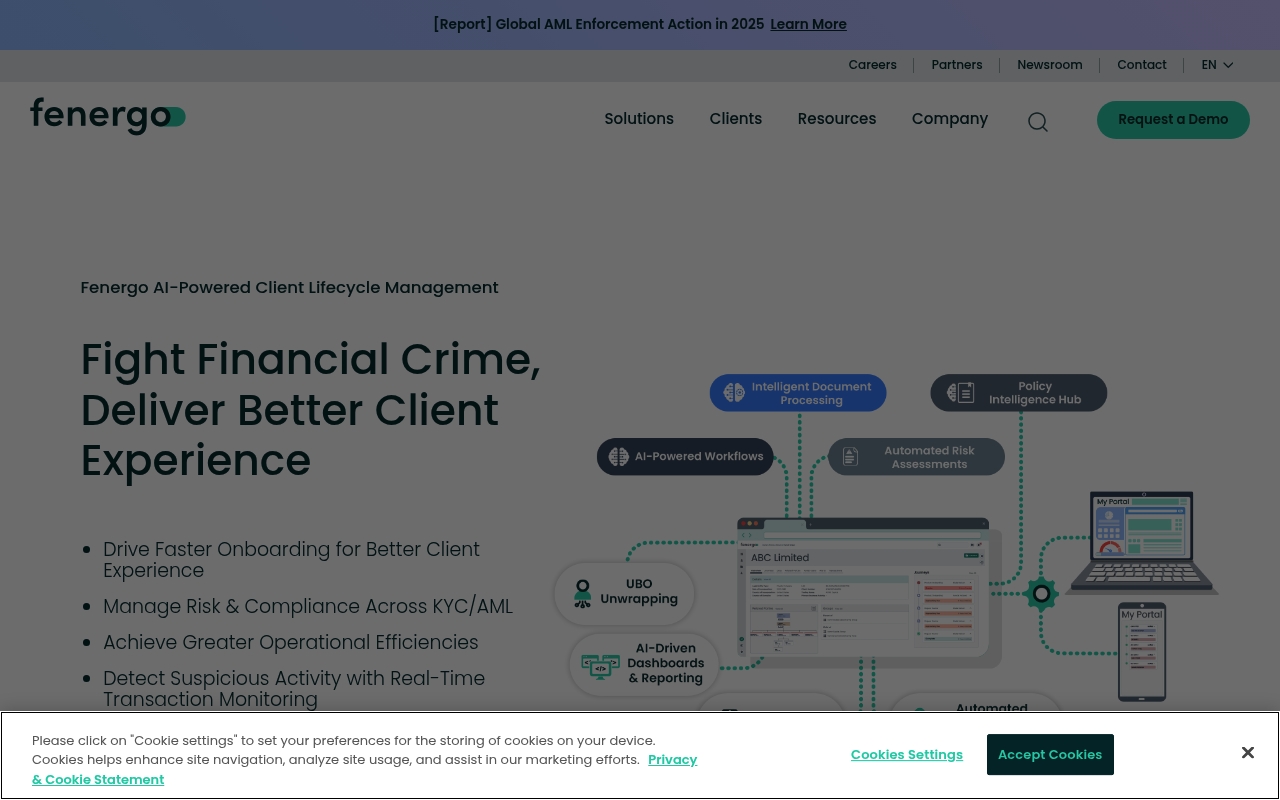
Compliance has long been the unglamorous backroom operation of financial services—heavy, expensive, and often painfully slow. Fenergo flips that script by turning regulatory friction into operational advantage. The Dublin-based software company automates the gruelling work of onboarding clients, managing their data, and staying compliant with an ever-shifting maze of regulations. What banks and investment firms once treated as a cost center, Fenergo repositions as competitive edge.
At its core, Fenergo is a digital client lifecycle management platform. It consolidates onboarding, KYC, AML screening, sanctions checks, and ongoing regulatory monitoring into a single, integrated workflow. Rather than legacy institutions juggling multiple point solutions and manual spreadsheet cultures, Fenergo orchestrates the entire client journey—from first interaction through renewal—in a single intelligent system. The software ingests regulatory data, flags anomalies, and automates approvals where rules allow, freeing compliance teams to focus on judgment calls that actually require human expertise.
What sets Fenergo apart in a crowded RegTech space is its disciplined focus on the regulated financial institution as customer, not the consumer. While plenty of fintechs chase sexy consumer-facing applications, Fenergo has built deep, sticky relationships with banks, asset managers, and brokers who need sophisticated, audit-proof compliance infrastructure. It operates at institutional scale—handling millions of client records, complex entity hierarchies, and regulatory jurisdictions spanning continents.
In an era when regulatory fines have become nine-figure line items and reputational damage from compliance failures can tank a bank's stock price, Fenergo sits at the nerve center of institutional risk management. It's not the flashy side of fintech, but it's arguably the most essential.
Categories
RegTechIdentity & KYCFinancial Infrastructure
wayflyer.com
Wayflyer
wayflyer.com🇮🇪 Ireland
Wayflyer is an Irish fintech that solves a peculiar problem in e-commerce: founders who sell online often can't access the capital they need because traditional banks don't understand their business model. The company uses real-time sales data from platforms like Shopify and Amazon to underwrite credit decisions in minutes rather than months, offering flexible funding with repayment terms tied directly to daily revenue.
What makes Wayflyer different is its willingness to lend to merchants that legacy finance overlooks—lower-revenue sellers, newer businesses, international operators. While traditional lenders fixate on collateral and personal credit scores, Wayflyer looks at transaction flows, growth trajectory, and actual business performance. The underwriting is algorithmic, the approval is fast, and the cost is transparent. You don't need perfect credit or three years of accounts. You need sales data.
In the crowded world of e-commerce financing, most players focus either on micro-loans or venture-scale rounds. Wayflyer operates in the messy middle—typically funding between €5,000 and €500,000 for merchants generating €30,000+ monthly revenue. It competes with Shopify Capital in North America but has built particular strength across Europe, where merchant fragmentation is higher and credit access more constrained.
The company represents a broader shift in fintech: away from point solutions toward platforms that integrate data, credit decisioning, and cash flow management. Wayflyer isn't just lending; it's becoming infrastructure for the digital commerce economy, particularly for the thousands of small sellers who power e-commerce but remain invisible to traditional finance.
Categories
LendingSME Finance
evervault.com
Evervault
evervault.com🇮🇪 Ireland
Evervault is a European cryptography company that lets developers encrypt sensitive data in transit and at rest without rearchitecting their systems. Rather than forcing teams to build custom encryption pipelines or rely on legacy HSM infrastructure, Evervault provides APIs and SDKs that integrate directly into applications—turning what was once a compliance headache into a developer experience problem.
The company operates at the infrastructure layer, sitting between your database and your users. It handles encryption orchestration, tokenization, and secure computation without requiring you to manage keys or understand the underlying cryptography. This means your data stays encrypted in your own cloud account, your keys stay with you, and third-party vendors never see plaintext information.
In a European market where data residency and privacy regulations have teeth, Evervault solves a real problem: companies need to protect customer data but can't afford to rebuild their entire tech stack. The platform works with existing databases, APIs, and infrastructure, making compliance less of an engineering ordeal.
Evervault positions itself as the encryption layer for modern applications—not a database replacement, not a VPN, but the plumbing that makes data protection feel native to your code. It's particularly relevant for fintech companies handling payment cards, personal identifiers, and healthcare records across distributed systems. The company is helping reshape how European companies think about security: not as an afterthought, but as architecture.
Categories
Fraud & SecurityIdentity & KYCRegTechFinancial Infrastructure
transfermate.com
TransferMate
transfermate.com🇮🇪 Ireland
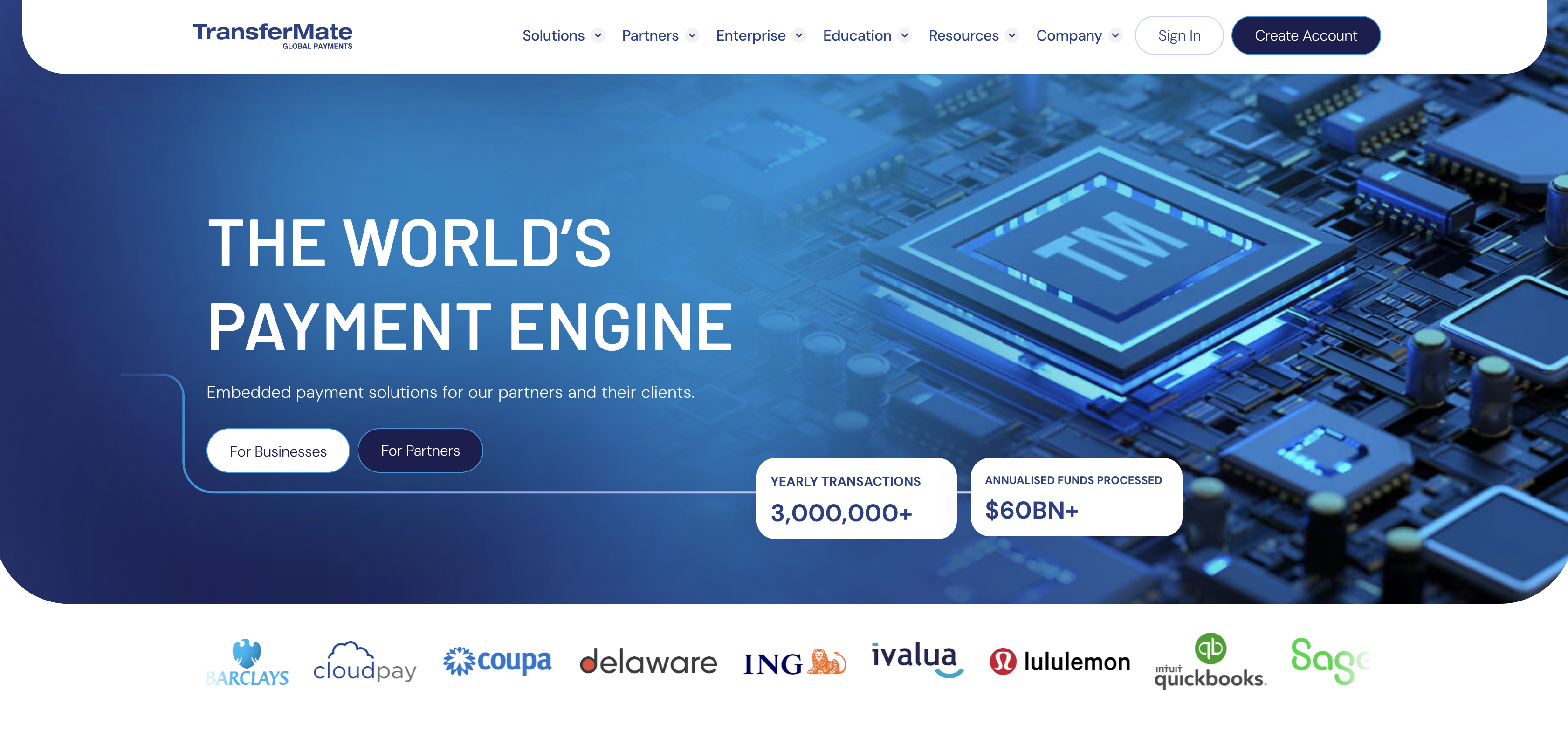
Building a global payments network from Ireland sounds geographically ambitious until you understand that what TransferMate built is the network rather than the consumer-facing product. Founded in Kilkenny in 2010, the company has spent over a decade assembling banking licences and direct connections to local payment systems across more than 200 countries — infrastructure that allows it to settle international payments domestically in each market rather than routing through correspondent banking. The technical achievement is substantial: TransferMate holds payment institution licences across multiple jurisdictions and has direct integrations with national clearing systems that most international payment companies access only through intermediaries. That infrastructure powers the international payment capabilities of major banks, fintechs, and platform companies including Allied Irish Banks, Wells Fargo, and ING. TransferMate operates primarily as a B2B infrastructure provider — the engine behind cross-border payment products that other companies offer to their customers. In the global payments infrastructure landscape, the companies that have built genuine local network access — rather than just routing through SWIFT and correspondent banks — represent a structurally different category of provider. TransferMate's two decades of regulatory and infrastructure investment make it one of the most credible examples of that model.
Categories
PaymentsFinancial Infrastructure
planetpayment.com
Planet Payment
planetpayment.com🇮🇪 Ireland
International visitors spending money in European hotels, restaurants, and retail stores encounter a specific payment experience that most of them barely notice but that generates significant revenue for the companies managing it — dynamic currency conversion. Planet Payment was founded in Ireland in 2003 as a specialist in currency conversion at point of sale, giving international cardholders the option to pay in their home currency when transacting abroad. That single capability — well-executed and widely distributed — built a business that expanded into broader payment acceptance and merchant services for the hospitality and retail sectors. Planet acquired Global Blue's payments division and a series of other payment businesses, evolving from a currency conversion specialist into a full-service payment and currency management platform serving hotels, retailers, and healthcare providers across Europe and beyond. The international hospitality sector — hotels, luxury retail, and tourist-facing businesses — generates a disproportionate volume of international card transactions, making it a concentrated market for currency conversion and payment optimisation services. Planet's deep integration with hospitality property management systems and point-of-sale platforms gives it a distribution advantage in that sector that is difficult to replicate.