Country
Companies10 of 66
atombank.co.uk
Atom Bank
atombank.co.uk🇬🇧 United Kingdom
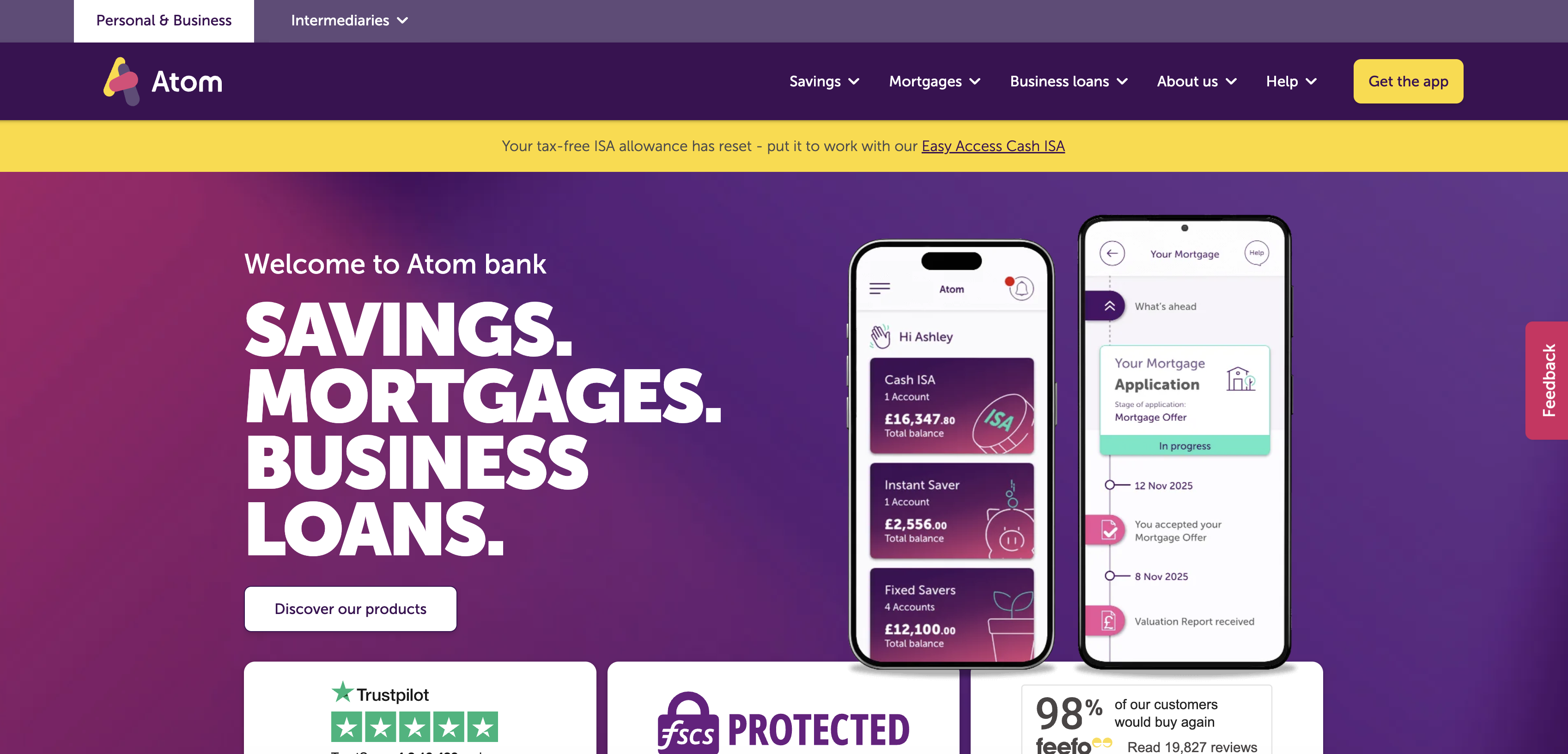
Atom Bank is a British digital bank that strips away the branch infrastructure and legacy systems weighing down traditional lenders. Launched in 2015, it operates as a fully licensed bank—not a fintech wrapper around someone else's platform—meaning it controls its own destiny in a way most digital challengers cannot. The business model is straightforward: mortgages and savings products delivered through mobile and web, with no physical locations to maintain. Atom positions itself as the thinking person's alternative to high street banks, catering to customers who've already abandoned branch visits and prefer rates that reflect efficiency rather than marble foyers. What distinguishes Atom from the crowded challenger space is its focus on residential mortgages rather than chasing the broadest possible customer base.
While most UK digital banks splinter their attention across current accounts, payments, and investing, Atom has doubled down on what it knows—lending and savings—building deeper expertise in those channels. The company serves a particular demographic: digitally native British homebuyers and savers who value transparency and competitive pricing over brand heritage. In the European fintech landscape, Atom represents a different approach than the pan-European payment processors or API-first infrastructure plays; it's a genuine bank competing on execution and simplicity rather than disruption theater. That positioning has proven durable enough to weather a competitive market and regulatory scrutiny that has claimed flashier rivals.
Categories
Digital BankingLending
finbee.lt
Finbee
finbee.lt🇱🇹 Lithuania
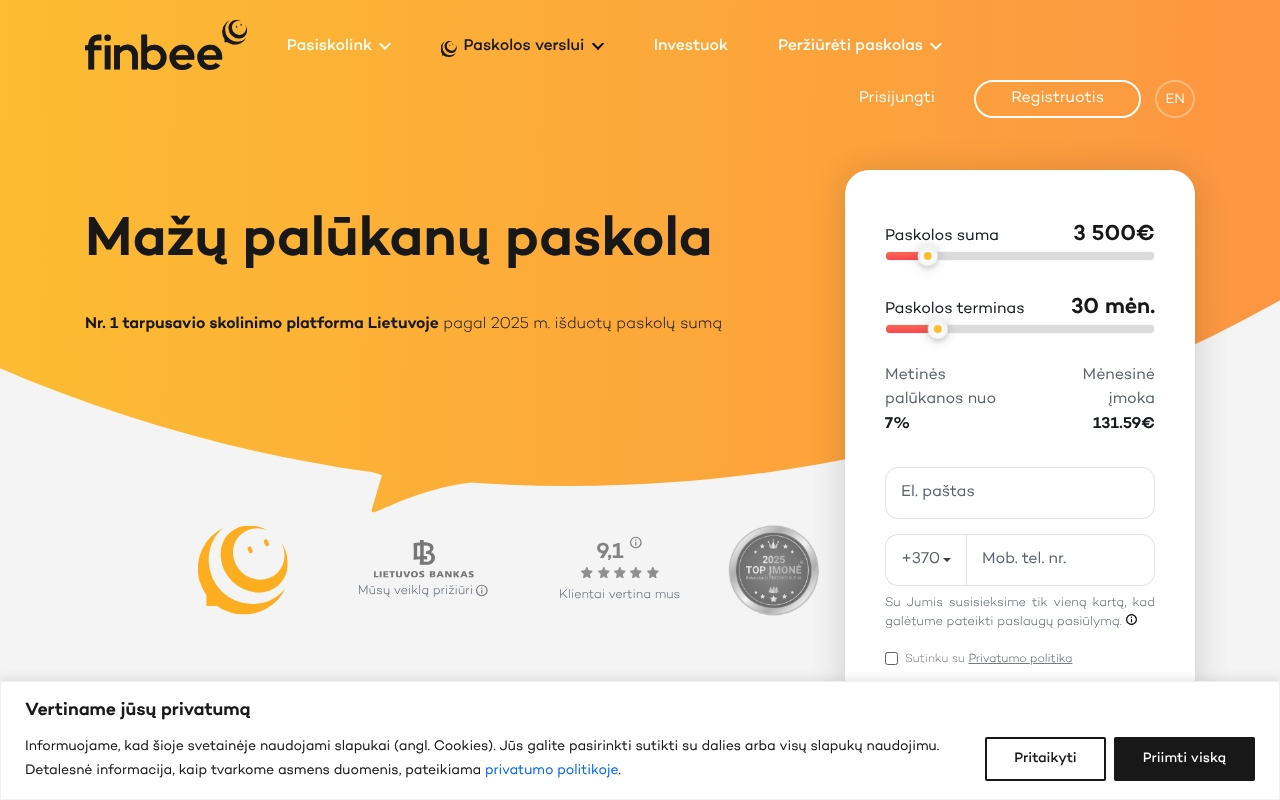
Peer-to-peer business lending — connecting retail investors with creditworthy small businesses needing growth or working capital — represents a category within marketplace lending where the underwriting complexity is greater than consumer P2P but the credit characteristics are different. Finbee was founded in Vilnius in 2015 to build a Lithuanian platform offering both consumer and business P2P lending products, with an underwriting infrastructure designed to evaluate the specific risk characteristics of Lithuanian SMEs alongside individual borrowers. The platform has built a substantial domestic position in the Lithuanian marketplace lending segment, attracting both local and Pan-European investors looking for exposure to Lithuanian credit. Finbee's product range and operational depth reflect a decade of operating in a market that has been one of Europe's more active testbeds for P2P lending innovation — with multiple platforms, supportive regulation, and a retail investor base willing to engage with marketplace lending products. In the Baltic alternative lending landscape, Finbee represents the category of platform that has built durability through diversified product offerings and disciplined underwriting rather than aggressive growth — a positioning that has aged better than some of the more growth-focused models that dominated the early P2P era.
Categories
LendingSME Finance
b2holding.no
B2Holding
b2holding.no🇳🇴 Norway
Distressed debt is one of the less glamorous corners of European finance — non-performing loans that banks have written off but that still represent real claims on real borrowers, traded between specialised investors who value them on the basis of expected recovery rather than face value. B2Holding was founded in Oslo in 2011 to build a Pan-European debt purchase and collection business — buying portfolios of non-performing loans from banks across Europe and operating the recovery infrastructure to manage them. The model is fundamentally cyclical: economic downturns produce more distressed debt, while economic recovery improves recovery rates. B2Holding has built a presence across more than 20 European markets, particularly strong in Central and Southeastern Europe where the legacy of past banking crises continues to generate distressed debt portfolios. The company is publicly listed on the Oslo Stock Exchange and represents the institutional-grade end of European debt management — not a consumer-facing fintech but a critical part of the financial system's mechanism for resolving non-performing exposures. In the broader European fintech landscape, B2Holding sits in a category that rarely gets discussed in the venture-backed startup conversation but that processes billions in financial activity through the recovery cycles that follow every credit expansion.
Categories
LendingRegTech
avafin.com
Avafin
avafin.com🇨🇿 Czech Republic
Consumer credit in Central and Eastern European markets continues to evolve through the slow process of digital infrastructure replacing the informal and bank-based credit options that previously dominated. Avafin operates in that evolving landscape, providing digital consumer loans across multiple CEE markets including the Czech Republic, Poland, Latvia, and Spain. The company offers short-term and instalment consumer credit through digital channels, with underwriting infrastructure that has been built around the specific credit data and regulatory environments of each market it operates in. Avafin's positioning emphasises responsible lending standards and regulatory compliance — a deliberately conservative posture in a sector where the line between accessible credit and exploitative credit is constantly contested by regulators and consumer protection organisations. The company is part of a broader portfolio of consumer credit operations that have been built around the operational depth required to lend across multiple CEE jurisdictions while maintaining consistent credit performance. In the broader European consumer credit landscape, the CEE digital lending segment has matured significantly over the past decade — moving from the early days of high-cost short-term lending toward a more diversified product range that increasingly resembles the consumer credit options available in Western European markets, just with different distribution and underwriting infrastructure underneath.
Categories
Lending
mambu.com
Mambu
mambu.com🇩🇪 Germany
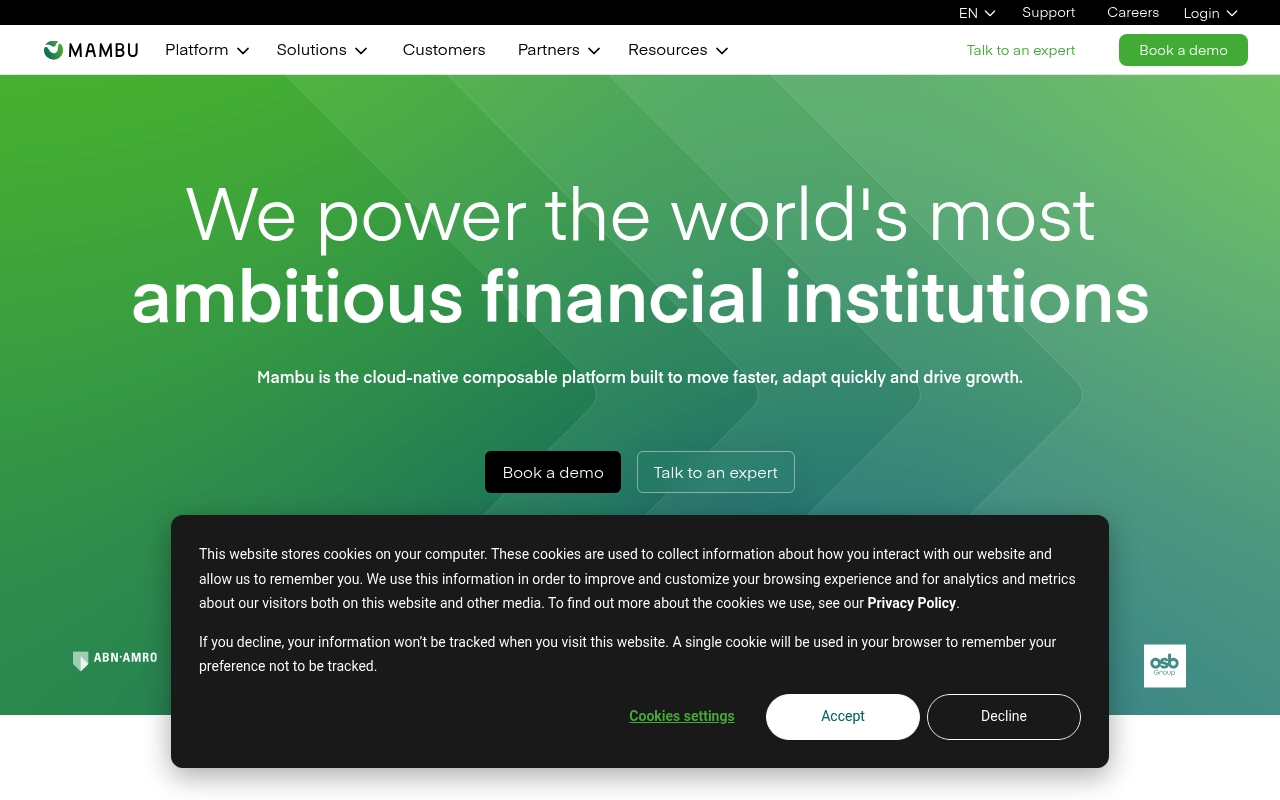
Mambu is a cloud-native banking software platform that lets financial institutions and fintechs launch and operate lending and deposit products without building from scratch. Rather than forcing customers into rigid legacy systems, Mambu provides composable banking infrastructure—modular APIs and pre-built components that work together or stand alone, depending on what you actually need.
The company sits at the intersection of two fintech realities: traditional banks are drowning in outdated core systems that can't keep pace with market demands, while new lenders and neobanks need speed without sacrificing compliance or scale. Mambu's approach is to be the operating system underneath, handling the heavy lifting of loan origination, deposit management, portfolio servicing, and regulatory reporting while letting clients focus on customer experience and product innovation.
What makes Mambu different from other core banking platforms is its emphasis on velocity. Institutions deploy in weeks rather than years. The platform is genuinely modular—you can pick the lending module, the deposit module, or both, and layer in third-party services through APIs. This flexibility has resonated with everyone from African microfinance networks to European challenger banks to enterprise lenders managing complex credit products.
Mambu is now a critical piece of infrastructure in the emerging markets fintech ecosystem, particularly across Africa and Asia, where it powers lending operations for hundreds of financial institutions. In Europe, it's carved out space among mid-market and challenger banks looking to avoid the capital expenditure and technical debt of legacy systems. The company represents a broader shift in fintech: away from end-to-end platforms that claim to do everything, toward specialized infrastructure that does one thing—backend financial operations—exceptionally well.
Categories
LendingDigital BankingFinancial Infrastructure
credolab.com
Credolab
credolab.com🇳🇱 Netherlands
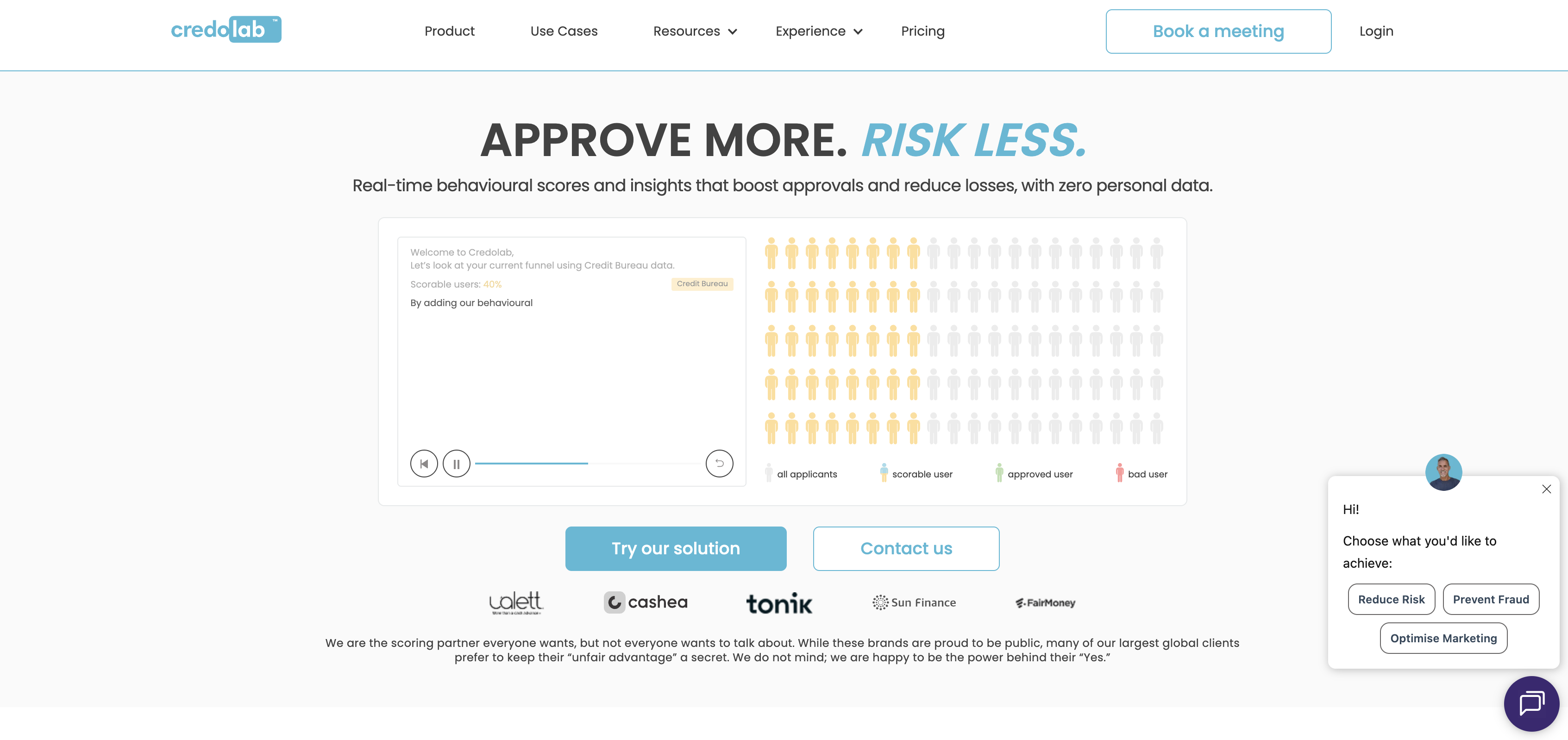
Credit decisions in markets without comprehensive credit bureau coverage have always been hard. The traditional underwriting model relies on credit history, income verification, and identity documents that significant portions of the global population either don't have or can't easily produce. Credolab was founded in 2016 with operations across Asia and Europe to address that gap with an unconventional data source — smartphone metadata. Its platform analyses behavioural patterns from a mobile device — without accessing personal content — to generate credit scores for consumers who have no traditional credit history. The data points are surprisingly predictive: how someone manages their phone storage, the pattern of their app usage, the regularity of their device behaviour all correlate with credit risk in ways that traditional underwriting misses. Credolab serves lenders, telcos, and digital platforms across emerging markets where credit bureau coverage is thin and the demand for digital credit is growing rapidly. In the alternative credit data landscape, where companies are competing to find the data sources that will define the next generation of underwriting, Credolab's behavioural smartphone approach is one of the more distinctive — and one that addresses a genuinely large unmet need in markets where billions of people remain credit-invisible to traditional financial systems.
Categories
Identity & KYCLending
finastra.com
Finastra
finastra.com🇬🇧 United Kingdom
Finastra is a London-based financial software giant that powers the plumbing behind modern finance. Rather than chasing consumers with flashy apps, Finastra builds the invisible infrastructure that banks, investment firms, and capital markets players depend on to operate. Think of it as the operating system for institutional finance—the sort of company most people have never heard of but whose systems process trillions in transactions daily.
The company's portfolio spans core banking systems, treasury management platforms, capital markets solutions, and lending technology. Finastra operates at the intersection of legacy finance and digital transformation, helping traditional institutions modernize their backend without scrapping decades of accumulated complexity. For banks and brokers, Finastra's software is often indispensable—the kind of vendor you can't easily replace once integrated into your operations.
In the European market, Finastra competes with other heavyweight infrastructure players but stands out for its broad coverage across retail, corporate, and capital markets segments. The company has grown partly through acquisition, absorbing competitors and bolt-on technologies to expand its ecosystem. It's not the startup disrupting finance from the margins; it's the entrenched platform that established institutions lean on to survive and scale.
Categories
Financial InfrastructureSME FinanceCapital MarketsLendingTreasury
monzo.com
Monzo
monzo.com🇬🇧 United Kingdom
Monzo is the UK's most downloaded banking app, a fully-fledged digital bank that ditched the branch model entirely and made mobile-first banking feel inevitable rather than experimental. Since launching in 2015 as a prepaid card startup, it evolved into a licensed bank offering current accounts, savings, loans, and investment features—all built around the phone-first thesis that banking should feel less like finance and more like an everyday utility.
What sets Monzo apart in a crowded field of challenger banks is its obsession with transparency and user control. Transaction categorization happens automatically but lets you override it instantly. Spending insights arrive in real-time rather than monthly statements. Customer support happens via in-app chat with actual humans who have context on your account. There's no pretense, no hidden fees, no terms written in legalese—a deliberate stance against how traditional banking communicates.
In Europe's neobank landscape, where dozens of competitors offer slick apps and fast account opening, Monzo has maintained its edge through relentless product iteration and a zealous community of early users. It expanded beyond the UK into Europe, acquiring customer bases in France and Italy, though it remains most mature in its home market. The company went public on the London Stock Exchange in 2023, a rare fintech exit that validated the full-bank model over lighter-weight payment-only plays.
Monzo represents a particular type of fintech success: not a SaaS infrastructure play or a verticalized lending specialist, but rather a consumer-facing bank that proved the regulatory and operational complexity of holding a banking license was worth solving if you could deliver an experience genuinely better than incumbents. It's a reminder that sometimes the fintech opportunity isn't in unbundling banking, but in rebuilding it from first principles.
Categories
Digital BankingLendingWealthPersonal Finance
iwoca.co.uk
iwoca
iwoca.co.uk🇬🇧 United Kingdom
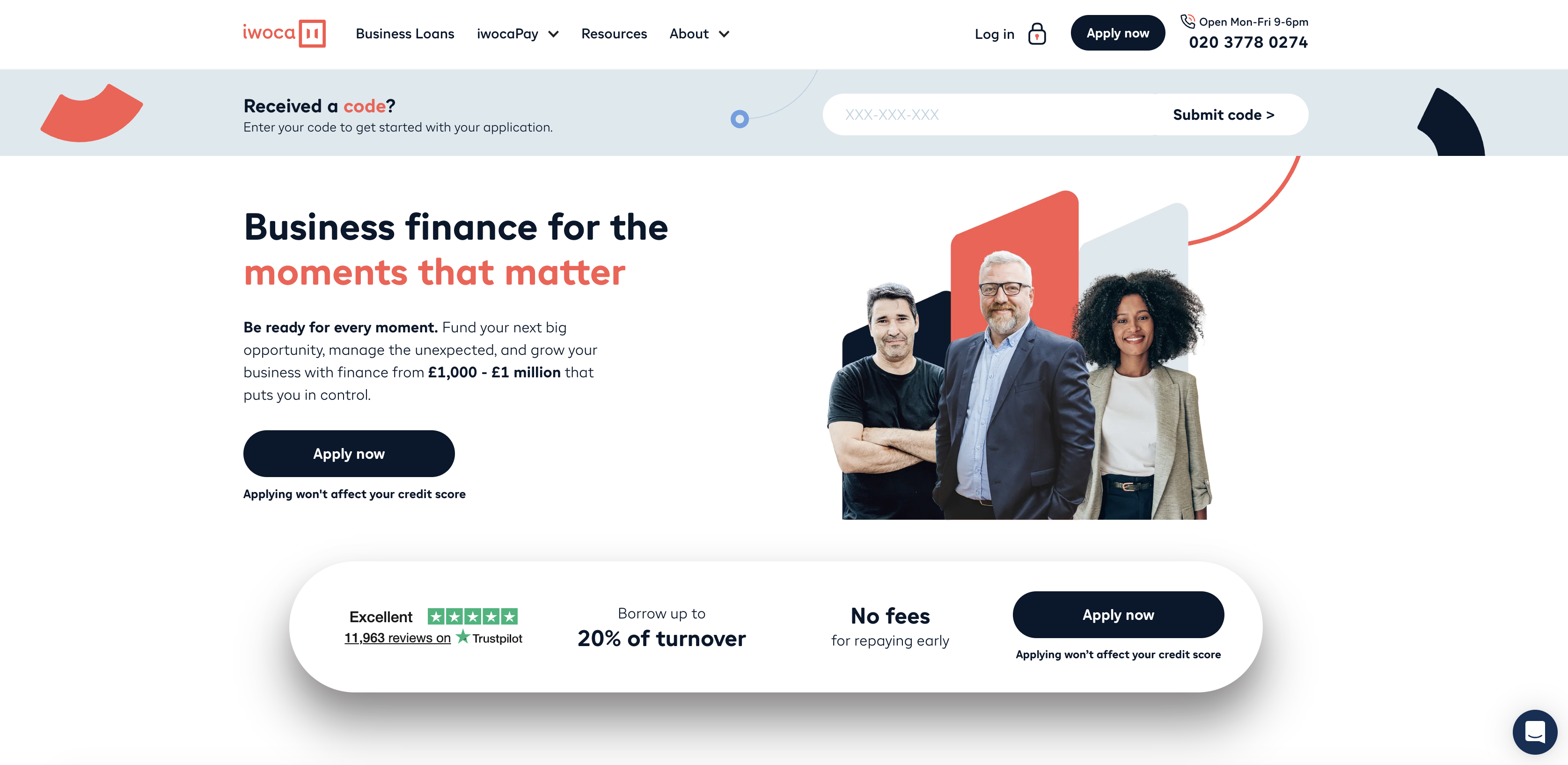
iwoca is a British fintech that turns the SME lending game upside down. Instead of sitting in a bank branch explaining cashflow statements to a skeptical manager, small business owners can get funded in days—sometimes hours—through a slick online platform. The company uses AI and open banking data to assess creditworthiness, stripping away the gatekeeping that's long defined traditional lending. Founded in 2012, iwoca has become one of the few alternative lenders that actually feels like it was built in the 21st century, not retrofitted from a 1995 spreadsheet.
The core pitch is deceptively simple: connect your business bank account, let the algorithm run, and get a decision without the theater. Most UK banks still treat SMEs like supplicants; iwoca treats them like customers. Loans range from a few thousand pounds to over £100,000, flexibly structured to match actual business needs rather than the lender's comfort zone. The speed is the real differentiator—traditional invoice financing can take weeks; iwoca's paperless approach cuts that to days. The algorithm isn't a black box either; transparency around how decisions are made matters when you're asking entrepreneurs to trust a machine over a handshake.
In the crowded European alternative lending space, iwoca has managed to feel both established and scrappy, which is rare. The company works with institutional capital partners (including the British Business Bank, which treats it almost like a quasi-public utility at this point), so you're not betting your growth on a startup's runway. That institutional backing combined with actual product design separates iwoca from the dozens of me-too players that launched in its wake and either pivoted or died. It's become a fixture in the UK's alternative lending ecosystem—the rare fintech that solved a real problem without needing a TikTok audience to prove it.
Categories
LendingSME Finance
instantor.com
Instantor
instantor.com🇸🇪 Sweden
Open banking before open banking — that is essentially what Instantor was doing when it launched in 2010. Founded in Stockholm, the company built one of the early Nordic platforms for retrieving and analysing bank account data on behalf of lenders and financial services companies. Its technology gave lenders access to verified bank account information for credit scoring and identity verification — capability that PSD2 would later formalise into a regulated framework but that Instantor was providing under the screen-scraping and direct integration models of the pre-PSD2 era. The Nordic markets, with their high digital banking adoption and consumer comfort with sharing financial data, were a natural environment for the model to develop. Instantor was acquired by ClearScore in 2021, integrating its banking data infrastructure into one of the UK's largest credit comparison platforms. The acquisition reflected the consolidation pattern that has defined open banking infrastructure — early specialists building genuinely valuable technology and being absorbed by larger consumer-facing companies that need the underlying data capability. In the Nordic open banking landscape, Instantor was one of the foundational platforms whose technology continues to power credit decisions across multiple consumer fintech products even after its independent existence ended.
Categories
Open BankingLending