Country
Companies10 of 16
wefox.com
wefox
wefox.com🇨🇭 Switzerland
Wefox is a digital insurance broker that cuts through the noise of traditional insurance shopping. Rather than piecing together quotes from multiple providers, customers get personalized coverage recommendations through a streamlined mobile-first platform. The company bundles home, auto, and pet insurance into a single digital experience, handling everything from comparison to claims—no brokers in grey suits required.
What sets wefox apart in Europe's insurance landscape is its focus on simplicity. While legacy brokers still rely on phone calls and paperwork, wefox does the legwork algorithmically, comparing hundreds of policies in seconds and presenting only the relevant options. The interface feels less like insurance shopping and more like opening a fintech app.
The company operates across multiple European markets, building a tech-forward alternative to the tired insurance broker model. It's positioned as insurance for people who'd rather not think about insurance—until they need to claim. In the broader fintech ecosystem, wefox represents a straightforward play on distribution innovation: taking an opaque, offline-first industry and making it transparent, fast, and mobile-native.
Categories
InsurTech
partasio.com
Partasio
partasio.com🇨🇭 Switzerland
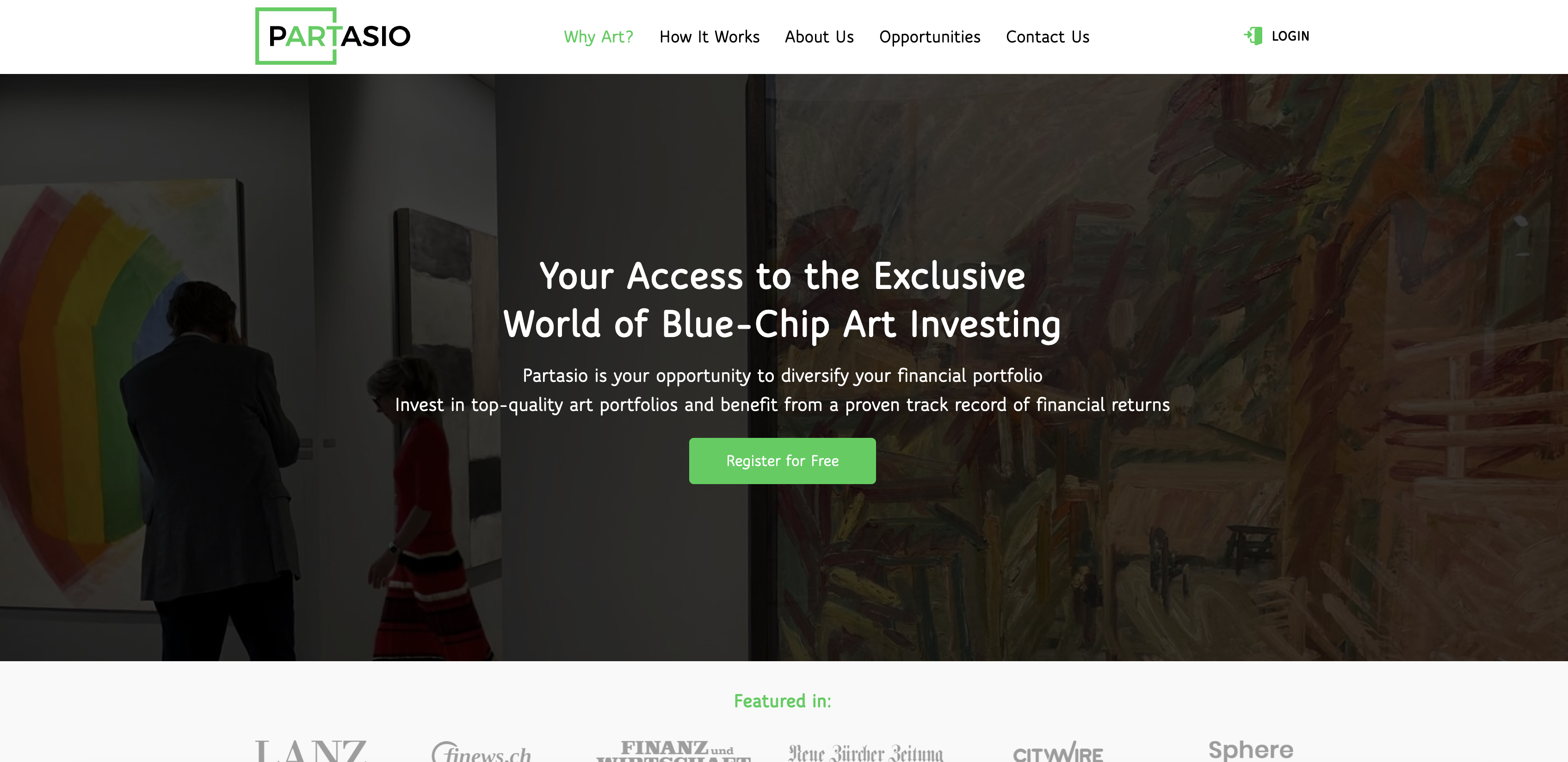
Most people think of art as something you hang on a wall, not something you add to a portfolio. That’s exactly the gap Partasio is trying to close.
Based in Switzerland, Partasio sits at the intersection of finance and culture, turning blue-chip art into a structured investment product. Instead of buying a single painting for millions, investors can access curated portfolios of museum-grade works—fractionalized, packaged, and managed like a financial asset.
At its core, the model is simple but powerful. Partasio builds portfolios of 4–6 high-end artworks from globally established artists, typically sourced off-market through private networks. Each portfolio is placed into a single-purpose vehicle, and investors buy into it through bankable certificates—complete with a Swiss ISIN—making it look and behave more like a traditional financial instrument than an art purchase.
The pitch isn’t just about access—it’s about diversification. Blue-chip art has historically shown low correlation with traditional asset classes like equities or real estate, making it attractive for investors looking to balance risk. But until recently, that market was largely reserved for ultra-wealthy collectors. Partasio lowers that barrier, with minimum investments starting around CHF 30,000.
What makes the platform stand out is how it blends private equity logic with the art world. Portfolios are actively managed over a multi-year horizon, with returns realized when the artworks are sold—typically within three to seven years. The company’s incentives are aligned with investors, earning performance fees only when profits are generated.
It’s part of a broader shift in fintech toward alternative assets—where everything from real estate to art is becoming more accessible, structured, and digital. But Partasio leans into something slightly different. It doesn’t try to reinvent art. It simply builds a financial layer around it.
In a market that’s historically opaque and exclusive, that alone is enough to make it stand out.
Categories
Wealth

unblu.com
Unblu
unblu.com🇨🇭 Switzerland
Unblu operates in the unglamorous but essential territory where financial services meet customer service—the moment a bank customer needs live help and picks up their phone instead of abandoning their application. Rather than building another chatbot, Unblu created a platform that lets banks embed co-browsing and real-time video conversations directly into their digital channels, turning web pages and apps into collaborative workspaces where advisors and customers can actually see what the other is doing.
The company targets financial institutions tired of losing conversions because their digital experiences feel abandoned. Unblu's platform sits between your app and your customer, enabling seamless handoffs from self-service to human guidance without the friction of traditional call centers. A user can be filling out a mortgage application, hit a question, and instantly video-call a specialist who sees their screen and can annotate, guide, and help in real time.
What distinguishes Unblu in the European fintech infrastructure space is its focus on regulated financial use cases. Banks don't need another Silicon Valley-style collaboration tool; they need compliance-first interactions that work within PSD2, open banking, and data protection frameworks. Unblu has embedded this rigor into its platform rather than bolting it on afterward.
The company serves a specific but high-value niche: banks and financial institutions that want to reduce abandonment rates, increase conversion, and do it through genuine human connection rather than algorithmic band-aids. In a landscape obsessed with APIs and automation, Unblu's bet is that sometimes the best digital experience is one that knows when to hand you a human.
Categories
Financial InfrastructureDigital Banking

netcetera.com
Netcetera
netcetera.com🇨🇭 Switzerland
Netcetera is a Swiss-based financial software company that builds infrastructure for digital payments and banking. Rather than chasing flashy consumer apps, they focus on the unsexy but essential work of connecting banks, payment networks, and merchants through APIs and platforms that handle the plumbing beneath every transaction. Their reach spans card payments, mobile banking, and open banking rails—serving a global roster of financial institutions that need rock-solid, scalable technology rather than venture-backed disruption narratives. In markets where regulatory complexity and legacy system integration matter more than speed-to-market, Netcetera has quietly become indispensable. They approach fintech as a B2B engineering problem, not a consumer trend, which is exactly why you've never heard of them despite their work touching millions of transactions daily. The company represents a particular strain of European fintech: deeply technical, institution-friendly, and skeptical of hype. They're the kind of partner that traditional banks and payment processors turn to when they need to modernize without tearing everything down. In an ecosystem crowded with neobanks and consumer lending apps, Netcetera's unglamorous expertise in payment orchestration, card processing, and banking APIs underscores a fundamental truth about fintech infrastructure: the real value often hides behind the scenes, in systems nobody sees but everyone depends on.
Categories
Financial InfrastructurePaymentsDigital BankingOpen Banking
crealogix.com
Crealogix
crealogix.com🇨🇭 Switzerland
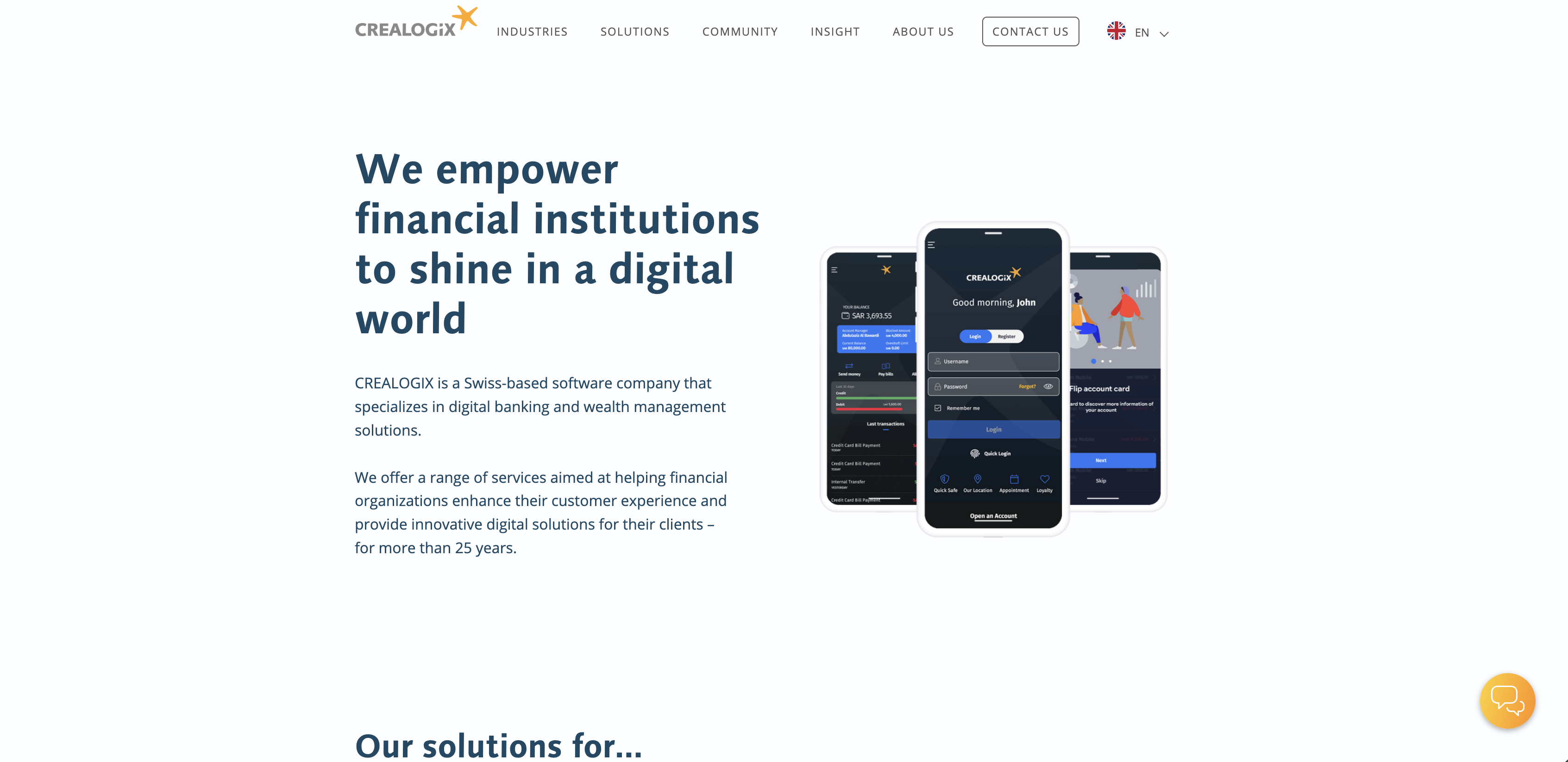
Crealogix is a Swiss fintech company that builds digital banking platforms for financial institutions across Europe. Rather than starting from scratch, banks and wealth managers plug into Crealogix's modular software suite to modernize their customer experience—covering everything from retail and corporate banking interfaces to wealth management portals and mobile apps.
The company operates as an infrastructure play in the digital transformation space. Its platforms run on a microservices architecture, letting financial institutions pick and choose the components they need rather than ripping out legacy systems entirely. This approach has gained traction with mid-market and enterprise banks looking to compete with neobanks without the cost of a complete rebuild.
Crealogix sits in a pragmatic middle ground between traditional banking software vendors and modern fintech disruptors. It's not trying to be a bank itself; instead, it partners with incumbents and increasingly with smaller financial institutions across German-speaking Europe and beyond. The company's strength lies in understanding both the technical demands of modern digital banking and the regulatory complexity that traditional banks navigate daily.
In the evolving European fintech landscape, Crealogix represents the infrastructure generation—the companies enabling the banking industry's digital transition rather than replacing it entirely.
Categories
Financial InfrastructureWealthDigital Banking

additiv.com
Additiv
additiv.com🇨🇭 Switzerland
Additiv is a treasury and cash management platform built for the modern corporate finance team. It sits at the intersection of spreadsheets and enterprise software—companies spend billions managing liquidity across multiple banks, currencies, and counterparties, yet most still rely on fragmented manual processes. Additiv replaces that chaos with a unified workspace where teams can forecast cash flows, manage payments, and monitor FX exposure in real time.
The platform connects directly to a company's banking infrastructure, pulling live transaction data and balances across all their accounts. From there, teams can model scenarios, automate routine reconciliation, and execute payments without context-switching between tools. It's designed for finance managers and treasurers who've outgrown spreadsheets but don't want the bloat of legacy treasury systems.
In a market dominated by legacy players like Kyriba and FIS, Additiv positions itself as the cloud-native alternative—faster to implement, easier to use, and built for companies that actually want to control their cash position rather than just report on it. The company sits squarely in the corporate finance modernization wave that's reshaping how mid-market and enterprise companies think about liquidity. Unlike niche point solutions, Additiv attempts to be comprehensive enough to replace multiple tools while remaining nimble and intuitive.
Categories
Treasury
youhodler.com
YouHodler
youhodler.com🇨🇭 Switzerland
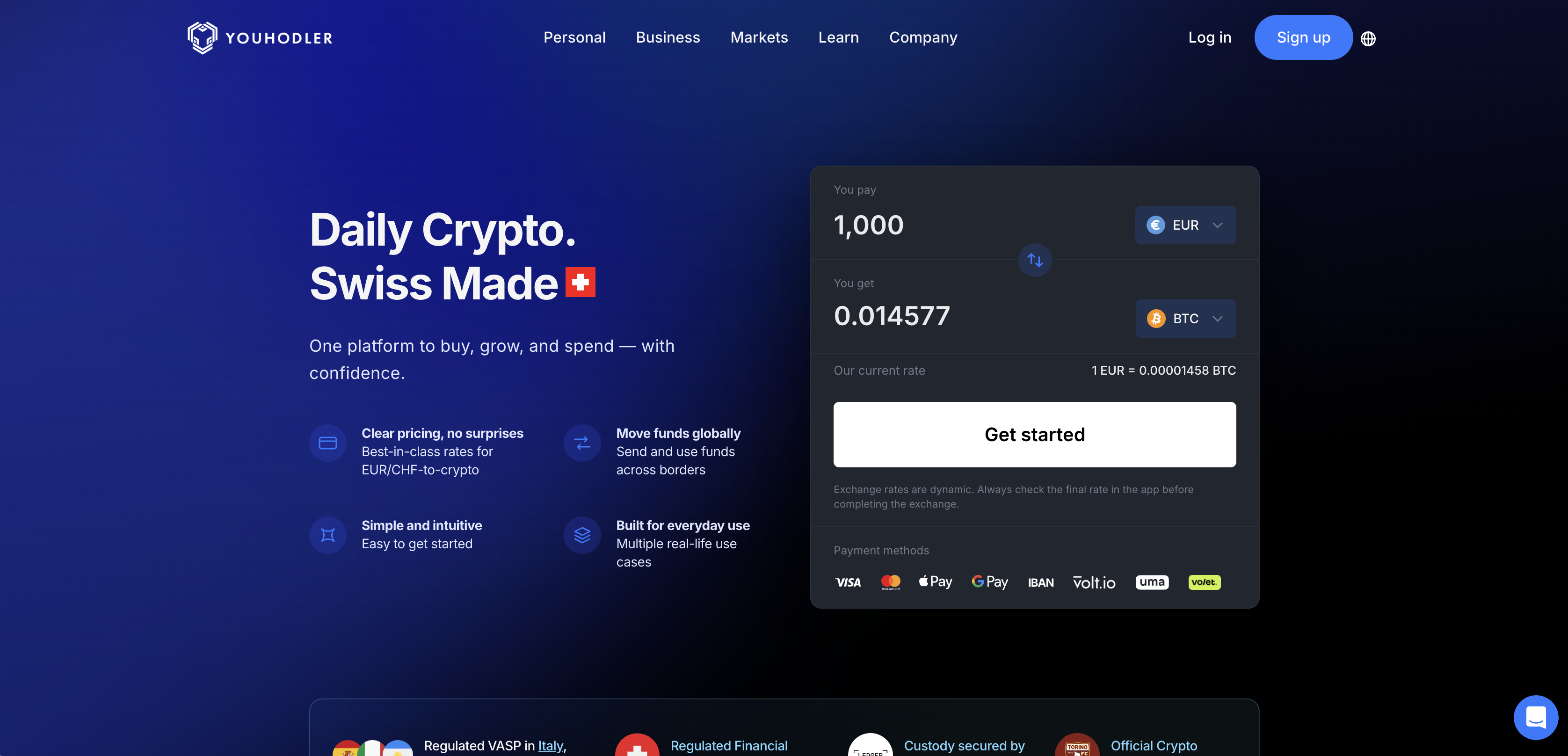
Swiss-regulated crypto financial products combine the technical innovation of crypto lending with the regulatory standing of Swiss financial services regulation — a combination that has appealed to international users who value regulatory clarity over the more permissive frameworks of some other crypto jurisdictions. YouHodler was founded in 2017 with operations in Switzerland and offers crypto-backed loans, savings products, and trading services to consumers across multiple international markets. Its model gives users the ability to borrow against cryptocurrency holdings, earn yield on deposited crypto, and trade between cryptocurrencies and stablecoins through a unified platform. The Swiss base has been operationally significant — Swiss financial regulation under FINMA provides clearer standing than the unregulated environment that defined early crypto lending, while still allowing the product range that crypto users seek. YouHodler has navigated the same crypto market dynamics that affected the broader category through the 2022-2023 period, including regulatory scrutiny and the broader market correction that reshaped crypto lending. In the European crypto financial services landscape, YouHodler occupies a position that combines crypto-native product capability with European regulatory infrastructure — a positioning that has become more rather than less relevant as MiCA implementation progresses and as the regulatory expectations for crypto financial services across Europe converge.
Categories
Crypto & Blockchain
postfinance.ch
PostFinance
postfinance.ch🇨🇭 Switzerland
Switzerland's postal system has been delivering more than letters for over a century. PostFinance emerged from Swiss Post's financial services division and became one of Switzerland's largest retail financial institutions — a bank that reaches into every corner of a country where the post office was historically the most accessible financial institution for ordinary people. It holds accounts for millions of Swiss residents and businesses, offering current accounts, savings products, and payment services with the distribution advantage of a nationwide postal network. PostFinance has been at the centre of Switzerland's digital payment transformation, operating the TWINT mobile payment system in partnership with other Swiss banks and investing in digital banking infrastructure that has modernised what could easily have remained a legacy institution. The Swiss regulatory environment has constrained PostFinance from offering mortgages and loans — a political decision that reflects the incumbent banking sector's influence — creating an unusual situation where one of Switzerland's largest account-holding institutions cannot lend. That constraint has pushed PostFinance toward partnership and platform models rather than the full-service banking approach its scale might otherwise support.
yapeal.ch
Yapeal
yapeal.ch🇨🇭 Switzerland
Banking licences in Switzerland are among the most coveted and most difficult to obtain in Europe — the Swiss Financial Market Supervisory Authority sets high standards and moves at a pace that reflects the country's preference for getting things right over getting them fast. Yapeal was founded in Zurich in 2018 with the ambition to build a fully licensed Swiss neobank from scratch, applying for and receiving a Fintech licence under Switzerland's bespoke regulatory category for digital financial services companies. That licence — the first of its kind granted in Switzerland — allowed Yapeal to hold customer deposits up to CHF 100,000 without requiring a full banking licence, creating a new category of regulated financial institution in one of the world's most conservative banking markets. Yapeal's product offers a digital account, Mastercard, and financial management tools aimed at Swiss consumers who want the experience of a modern neobank without sacrificing the regulatory protection of a Swiss-regulated institution. The company's regulatory achievement is arguably as significant as its product — demonstrating that Switzerland's financial regulator is willing to create space for digital-first financial institutions rather than simply protecting the incumbents.
Categories
Digital Banking
dukascopy.com
Dukascopy
dukascopy.com🇨🇭 Switzerland
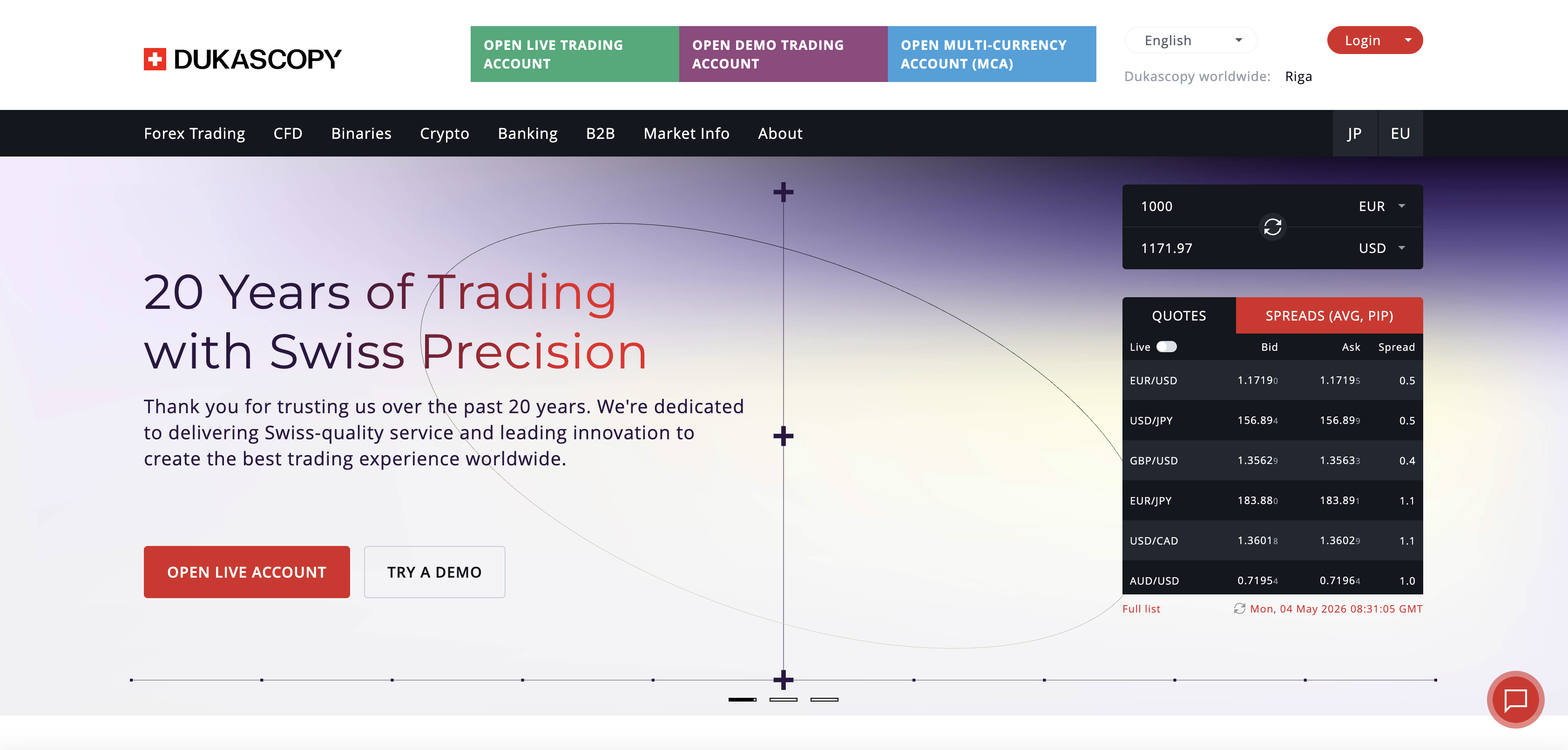
Dukascopy is a Swiss online financial platform that has spent two decades building infrastructure for forex, CFD, and crypto trading. The company operates its own bank and matching engine, which sets it apart from brokers that simply resell liquidity. This infrastructure-first approach means Dukascopy can offer tight spreads and direct market access without hidden markups.
The platform caters to retail traders and small institutions who want institutional-grade tools without the price tag. Its trading terminals rival professional setups, while the mobile app keeps things simple for casual traders. Dukascopy has also moved into crypto custody and blockchain services, positioning itself as a bridge between traditional finance and digital assets.
In the crowded retail trading space, Dukascopy distinguishes itself through ownership and transparency. Many competitors are broker-dealers; Dukascopy is a bank. This matters for client money protection and operational independence. While it lacks the consumer-facing polish of newer fintech apps, it appeals to traders who value substance over hype and appreciate the regulatory weight of Swiss banking.
The company represents a different model in fintech—not a startup chasing growth at all costs, but an established financial institution quietly building depth in forex, crypto, and institutional services.
Categories
PaymentsCapital MarketsCrypto & Blockchain