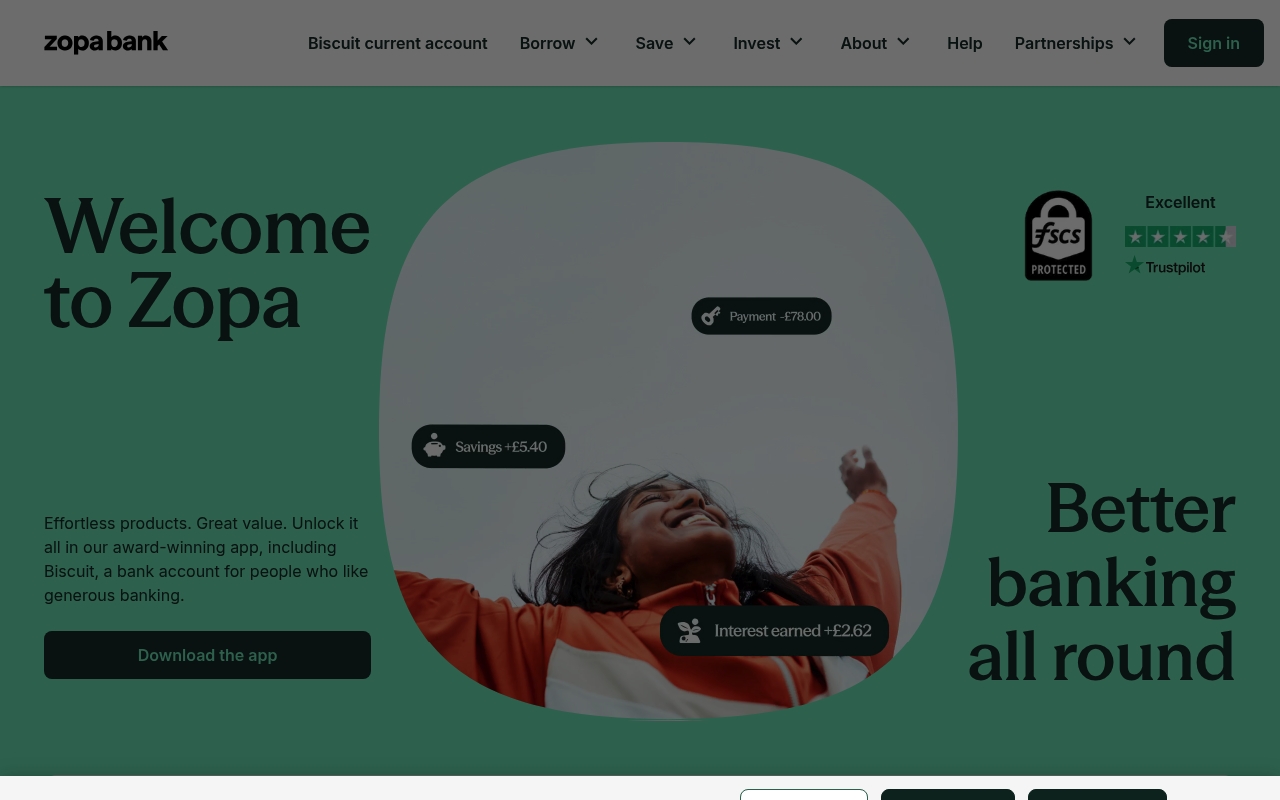
Zopa rewrote the lending playbook by putting people before profit margins. Founded in 2005, it was the original peer-to-peer lending platform in the UK—a marketplace where ordinary people could lend to one another, bypassing the bank middleman entirely. That ethos still runs through everything it does, though the model has evolved considerably.
Today, Zopa operates as a digital lender offering personal loans and credit products directly to consumers, backed by institutional funding rather than peer capital. It's stripped away the complexity traditional lenders love and built something genuinely transparent: you get a real interest rate upfront, no hidden fees, and a lending decision in minutes rather than days. The platform targets people with thin credit histories or subprime scores—segments that banks treat with suspicion and expensive rates.
What separates Zopa from the noise is its refusal to play the conventional credit game. Most lenders obscure terms or rely on manipulative affordability checks. Zopa's approach feels almost quaint by comparison: fair pricing, straightforward underwriting, and a genuine attempt to lend responsibly. It's positioned itself as the anti-bank lender in a market cluttered with me-too fintechs chasing the same high-income borrowers.
In Europe's competitive lending landscape, Zopa represents a maturing fintech that's learned to balance mission with sustainability—proof that there's still room for players who refuse to compromise on transparency.