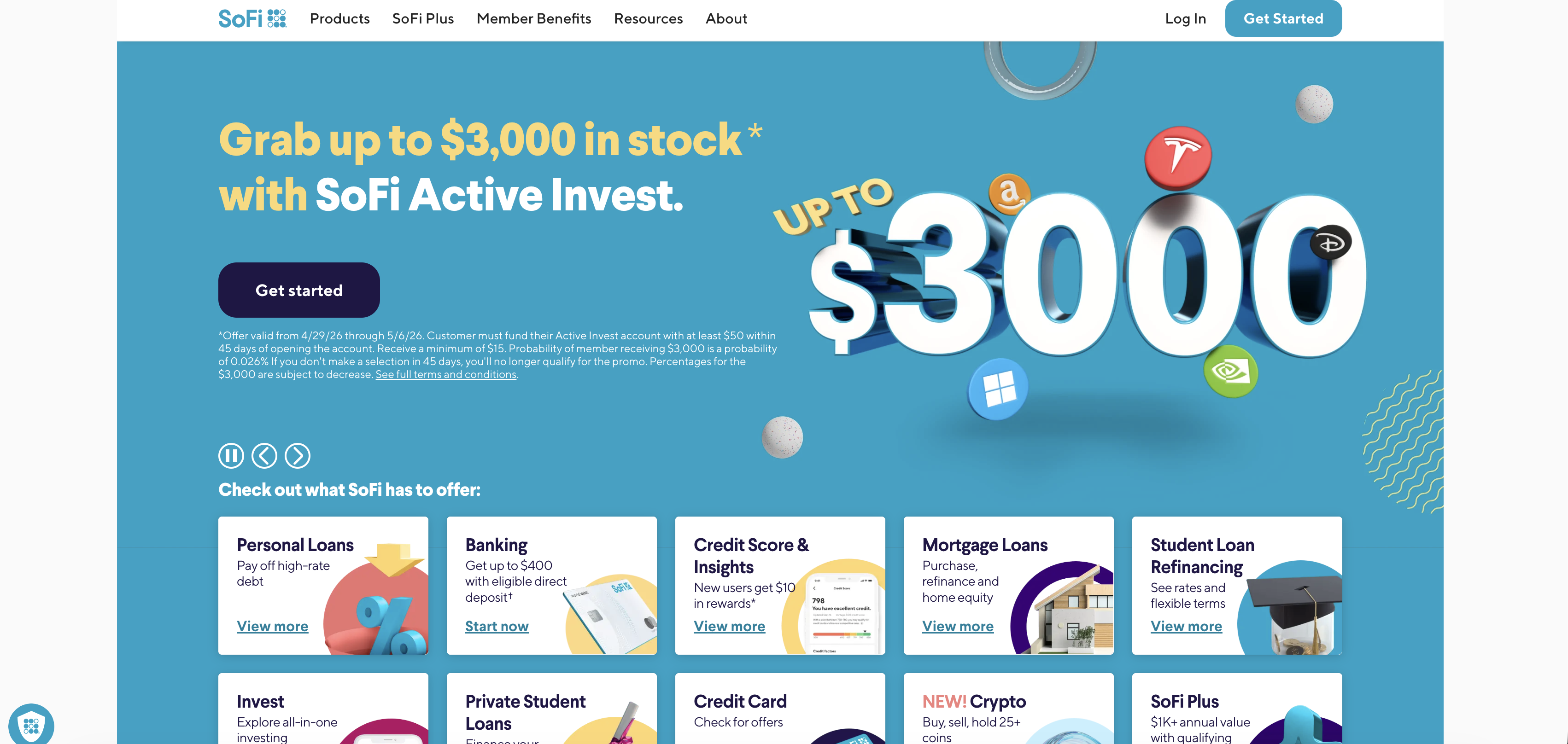
SoFi is a digital financial services platform that started as a student loan refinancer but has evolved into something closer to a full-stack neobank for millennials and Gen Z. The company stripped away the traditional bank playbook—no branches, no legacy systems, no pretense—and built a mobile-first experience that handles everything from checking accounts and investment accounts to personal loans and mortgages under one app.
What sets SoFi apart in the crowded American fintech space is its willingness to own the entire financial relationship rather than acting as a middleman between users and traditional banks. This ownership model means SoFi can offer competitive rates and a genuinely integrated experience, though it also comes with regulatory responsibility that most fintech startups avoid. The company pivoted from pure lending into wealth management, adding stock and crypto trading, robo-advisory services, and banking products through a mix of partnerships and eventually acquiring its own banking license.
For European fintech observers, SoFi represents the American template: vertical integration, brand-first positioning, and relentless expansion into adjacent financial categories once the core product achieves scale. It's a cautionary tale and a playbook simultaneously—efficient at customer acquisition but perpetually unprofitable, betting that network effects and cross-product penetration will eventually justify its burn rate. SoFi remains the reference point for what a truly integrated consumer fintech platform can look like, even as it struggles to prove that model profitable.