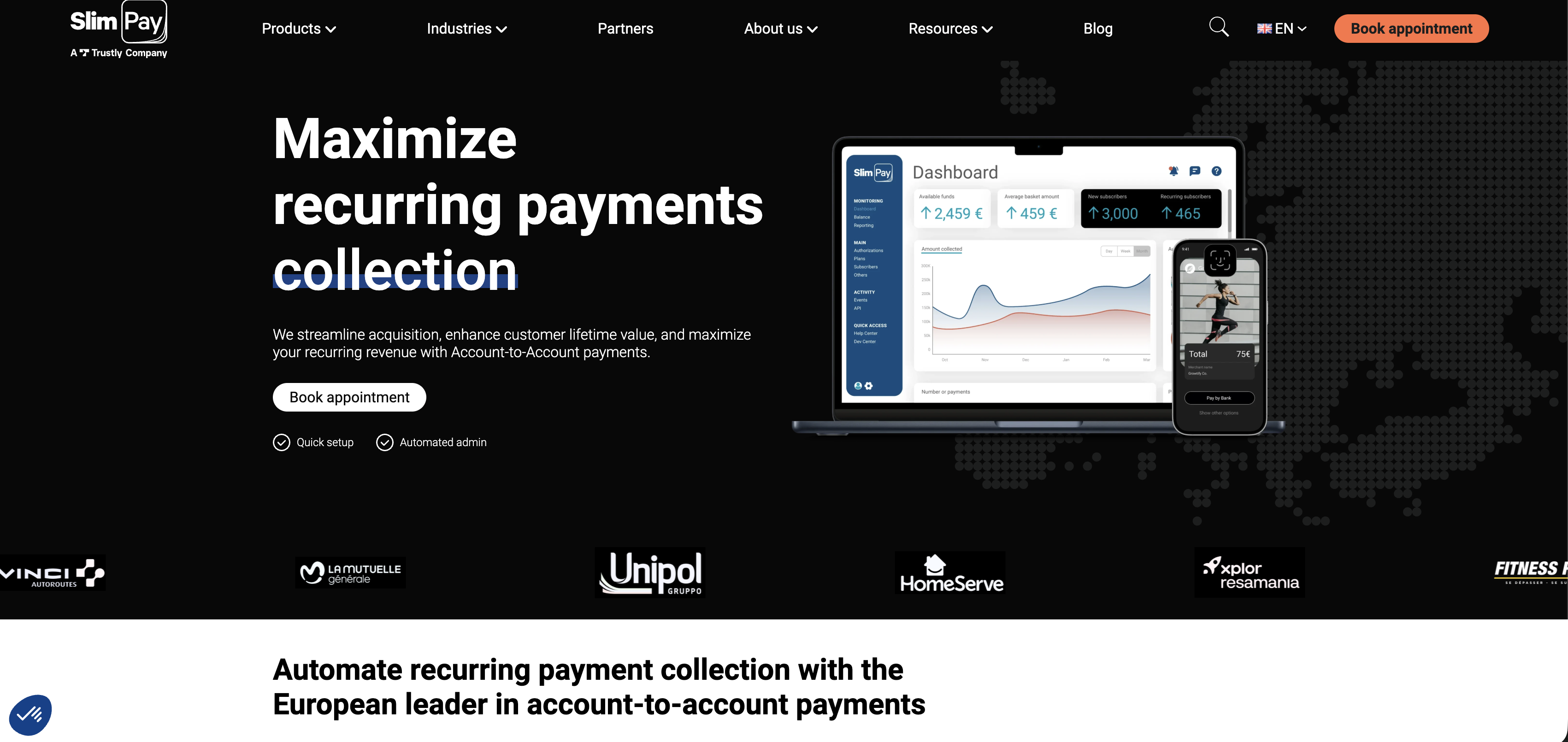
Slim Pay sits at the intersection of payments and open banking, quietly solving the friction that still exists when businesses want to collect money directly from customer bank accounts. The company has built a pan-European network that lets merchants and platforms initiate payments via SEPA Direct Debit and bank transfers, cutting through the complexity of fragmented payment rails across different countries. What makes Slim Pay distinct is its ability to orchestrate these flows seamlessly—no need to manage separate integrations for France, Germany, or Scandinavia when you want to scale across Europe. The platform works as both a white-label solution for financial institutions and a direct API for fintechs and merchants looking to embed bank-originated payments into their own applications. In a market flooded with card payment startups, Slim Pay has built its reputation on doing one thing exceptionally well: making account-to-account payments simple, compliant, and profitable. The company's model reflects a matured understanding of European payments infrastructure—it partners with banks rather than fighting them, which has made adoption among established financial services players remarkably smooth. For subscription businesses, marketplaces, and lending platforms, Slim Pay offers a genuinely different lever for payment collection, one that costs less than cards and works for customers without a credit card. It's the kind of boring-but-essential infrastructure that the fintech ecosystem actually needs.