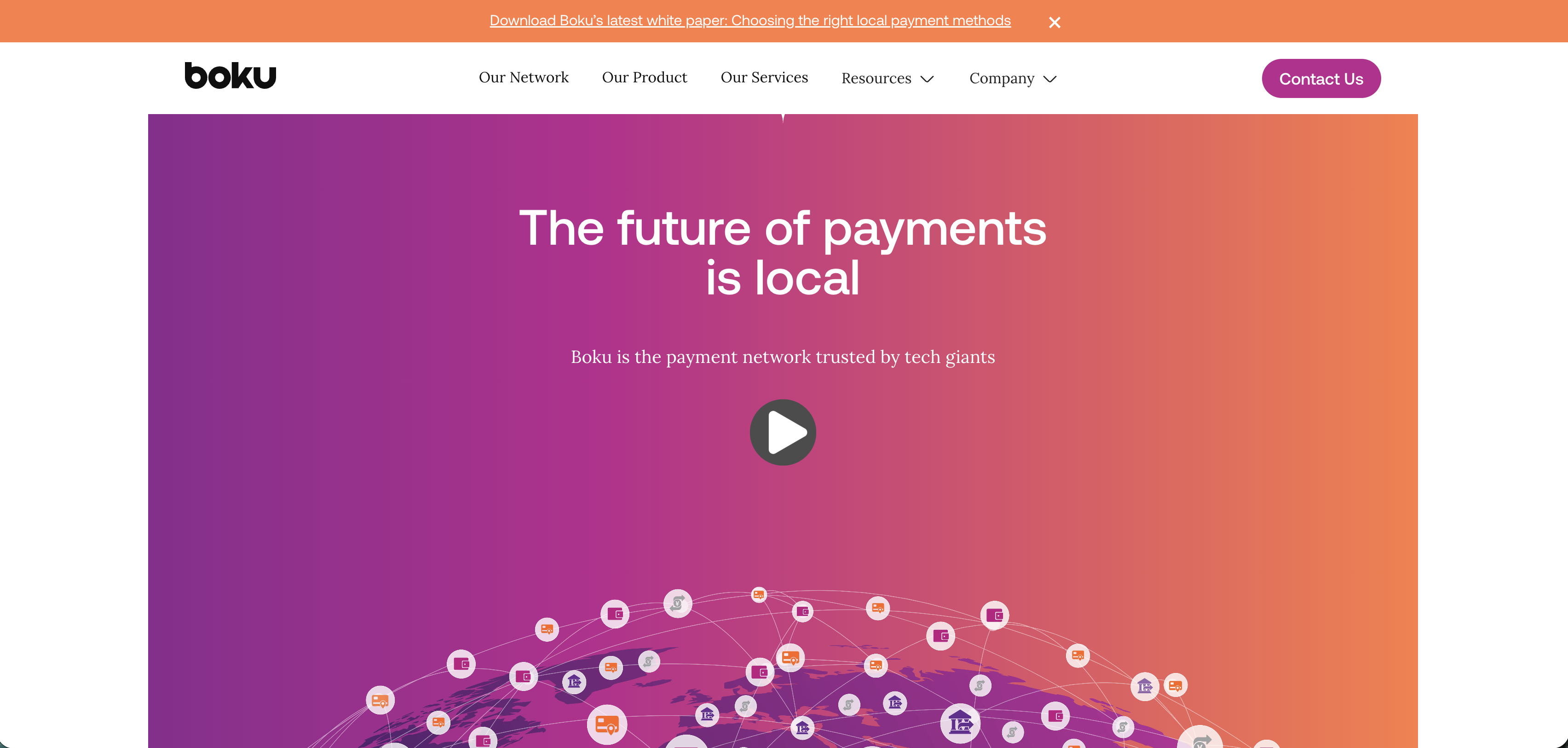
Boku operates at the intersection of payments and identity, offering a platform that lets people pay for digital goods and services using their mobile phone number instead of a card. The company's core insight is simple: identity and payment are intertwined, and most of the world prefers mobile to plastic. Rather than forcing users through traditional card flows, Boku taps into carrier billing and direct carrier integration, making checkout faster and less friction-prone. This matters enormously in emerging markets where card penetration is low but mobile adoption is nearly universal, and equally in developed markets where friction kills conversions. Boku's platform connects merchants and digital content providers—from gaming and streaming to app stores and software—with billions of consumers via the mobile operator network. The company handles the complexity of routing payments through hundreds of carriers across dozens of countries, abstracting away the technical and regulatory chaos that normally makes global payments hair-raising. Where most payment platforms optimize for card-first markets, Boku flips the script: it treats mobile and carrier billing as the primary rails, with cards as a fallback. This positioning has made the company indispensable to companies trying to reach users in Southeast Asia, Latin America, Africa, and beyond. Boku essentially became the operating system for alternative payment methods at a moment when the industry finally stopped pretending that cards would work everywhere. In the broader fintech and payments landscape, Boku represents the shift toward local and context-aware payment infrastructure—the recognition that one-size-fits-all global payments don't actually work, and that understanding regional payment preferences isn't a nice-to-have, it's existential.