Country
Companies10 of 51

mokka.ro
Mokka
mokka.ro🇷🇴 Romania
Mokka is a Romanian fintech platform built for the modern seller. Rather than forcing merchants into the rigid infrastructure of traditional payment processors, Mokka gives them a unified dashboard to manage payments, invoicing, and business basics from one place. The platform handles card payments, digital wallets, and local payment methods—all wired into a clean, merchant-friendly interface that feels less like enterprise software and more like something designed for actual humans. For Romanian SMEs and freelancers tired of juggling multiple logins and opaque fee structures, Mokka offers transparency and control that legacy banking and payment gateways simply don't provide. It's part merchant acquirer, part business backbone—a practical response to how payment infrastructure in Central & Eastern Europe still lags behind Western standards. Mokka sits at the intersection of embedded finance and merchant enablement, serving businesses that want payment functionality without the complexity.
Categories
PaymentsSME FinanceFinancial Infrastructure
indy.fr
Indy
indy.fr🇫🇷 France
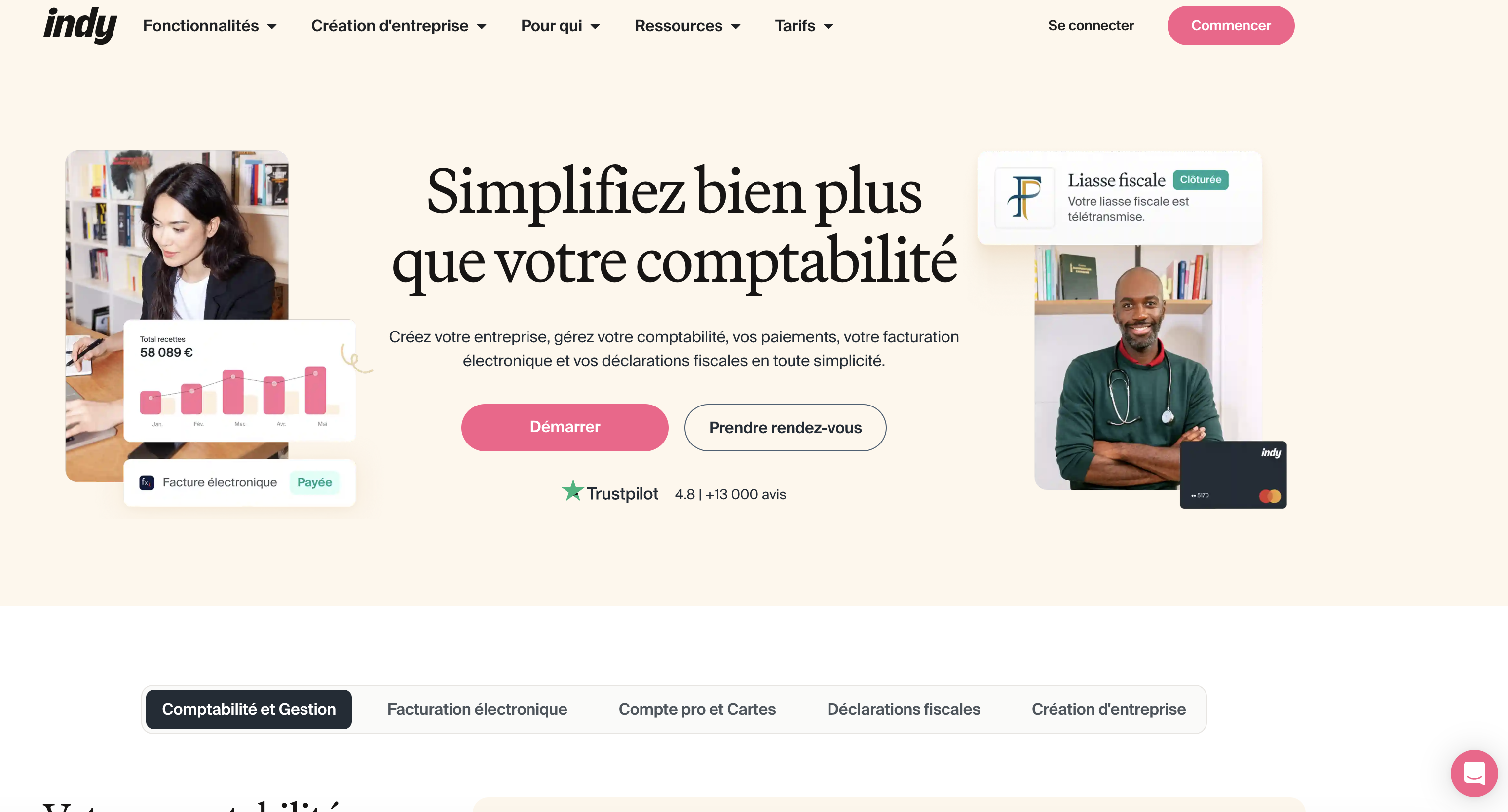
Indy is a French fintech built for freelancers and self-employed workers who are tired of juggling accounting software, invoicing tools, and bank dashboards across a dozen different apps. The platform consolidates business banking, invoicing, expense tracking, and tax compliance into a single workspace designed specifically for French independent professionals and micro-entrepreneurs.
Unlike traditional accounting software that feels built for accountants, Indy puts the solopreneur first—automating routine tasks like categorizing expenses and calculating quarterly tax estimates while keeping the interface clean and approachable.
The company has become a go-to solution across France for freelancers managing both the creative and administrative sides of their business, from photographers to consultants to digital agencies. It's one of Europe's clearest examples of how fintech can solve a specific, underserved market by building exactly what that market actually needs rather than trying to be everything to everyone. In a landscape crowded with generic SME finance platforms, Indy's laser focus on French self-employed workers—and their particular regulatory requirements and pain points—has established it as a cultural fixture in the French freelance community.
Categories
Digital BankingSME FinancePersonal Finance
seedlegals.com
SeedLegals
seedlegals.com🇬🇧 United Kingdom
Legal documents are one of the largest hidden costs of running a startup. Founders spend tens of thousands of pounds with law firms producing the term sheets, shareholder agreements, employee option schemes, and funding round paperwork that every growing company needs but few founders understand well enough to procure efficiently. SeedLegals was founded in London in 2016 to bring that legal infrastructure online. Its platform automates the creation of startup legal documents — fundraising agreements, employee equity, board resolutions, EMI option schemes — through a guided interface that produces lawyer-quality documents in hours rather than weeks, at a fraction of the cost. The product is grounded in genuine legal expertise — SeedLegals works with law firms and corporate lawyers to ensure the documents it produces meet the standards of the funds and investors that ultimately need to sign them. SeedLegals has become deeply embedded in the UK startup ecosystem, processing a significant share of EIS and SEIS funding rounds and supporting thousands of UK companies through their early-stage equity events. In the European startup infrastructure landscape, where regulatory and legal complexity varies significantly between markets, SeedLegals' UK depth represents the most mature example of legal automation for early-stage companies — a model that is gradually expanding to other European jurisdictions.
Categories
SME FinanceRegTech
capdesk.com
Capdesk
capdesk.com🇬🇧 United Kingdom
Equity management for private companies has historically been a mess of spreadsheets, lawyer markup, and reconciliation errors that compound silently until a fundraising round forces everyone to discover that the cap table reality differs from the cap table on file. Capdesk was founded in Copenhagen and grew up in London from 2015, building equity management software for private companies — a single source of truth for share allocations, option grants, vesting schedules, and shareholder communications. The product targets the gap between an Excel spreadsheet and a full-blown share registry: too small for the latter, too important to entrust to the former. Capdesk has built a strong client base across UK and European startups and scaleups, becoming one of the more trusted equity management platforms in Europe. The company was acquired by US-based Carta in 2023, consolidating the European equity management market under the umbrella of one of its largest global players. The acquisition reflects a broader pattern in private market infrastructure — the platforms that manage equity, fundraising, and investor relations are consolidating around a small number of comprehensive solutions. For European companies that built on Capdesk, the Carta acquisition brings them into a global platform with broader functionality at the cost of the local independence that some clients valued.
Categories
Capital MarketsSME Finance
finbee.lt
Finbee
finbee.lt🇱🇹 Lithuania
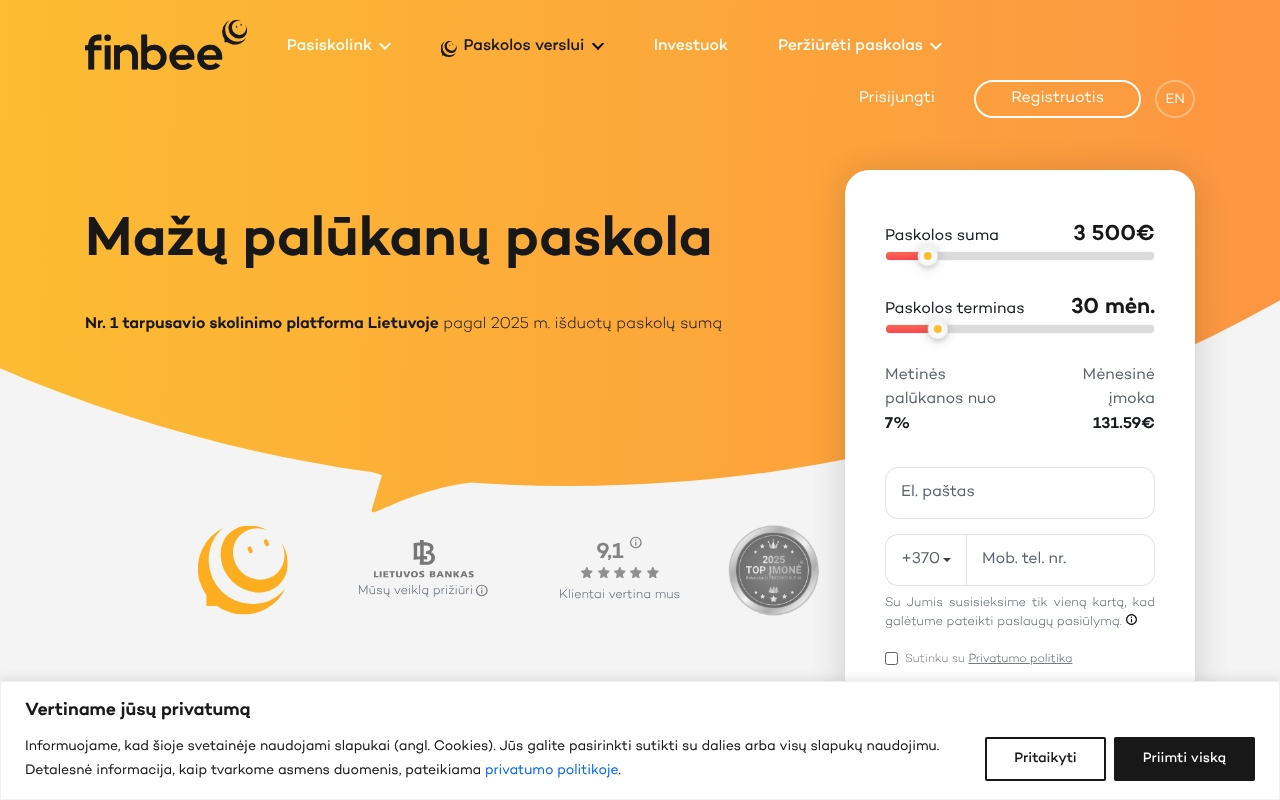
Peer-to-peer business lending — connecting retail investors with creditworthy small businesses needing growth or working capital — represents a category within marketplace lending where the underwriting complexity is greater than consumer P2P but the credit characteristics are different. Finbee was founded in Vilnius in 2015 to build a Lithuanian platform offering both consumer and business P2P lending products, with an underwriting infrastructure designed to evaluate the specific risk characteristics of Lithuanian SMEs alongside individual borrowers. The platform has built a substantial domestic position in the Lithuanian marketplace lending segment, attracting both local and Pan-European investors looking for exposure to Lithuanian credit. Finbee's product range and operational depth reflect a decade of operating in a market that has been one of Europe's more active testbeds for P2P lending innovation — with multiple platforms, supportive regulation, and a retail investor base willing to engage with marketplace lending products. In the Baltic alternative lending landscape, Finbee represents the category of platform that has built durability through diversified product offerings and disciplined underwriting rather than aggressive growth — a positioning that has aged better than some of the more growth-focused models that dominated the early P2P era.
Categories
LendingSME Finance
paysera.com
Paysera
paysera.com🇱🇹 Lithuania
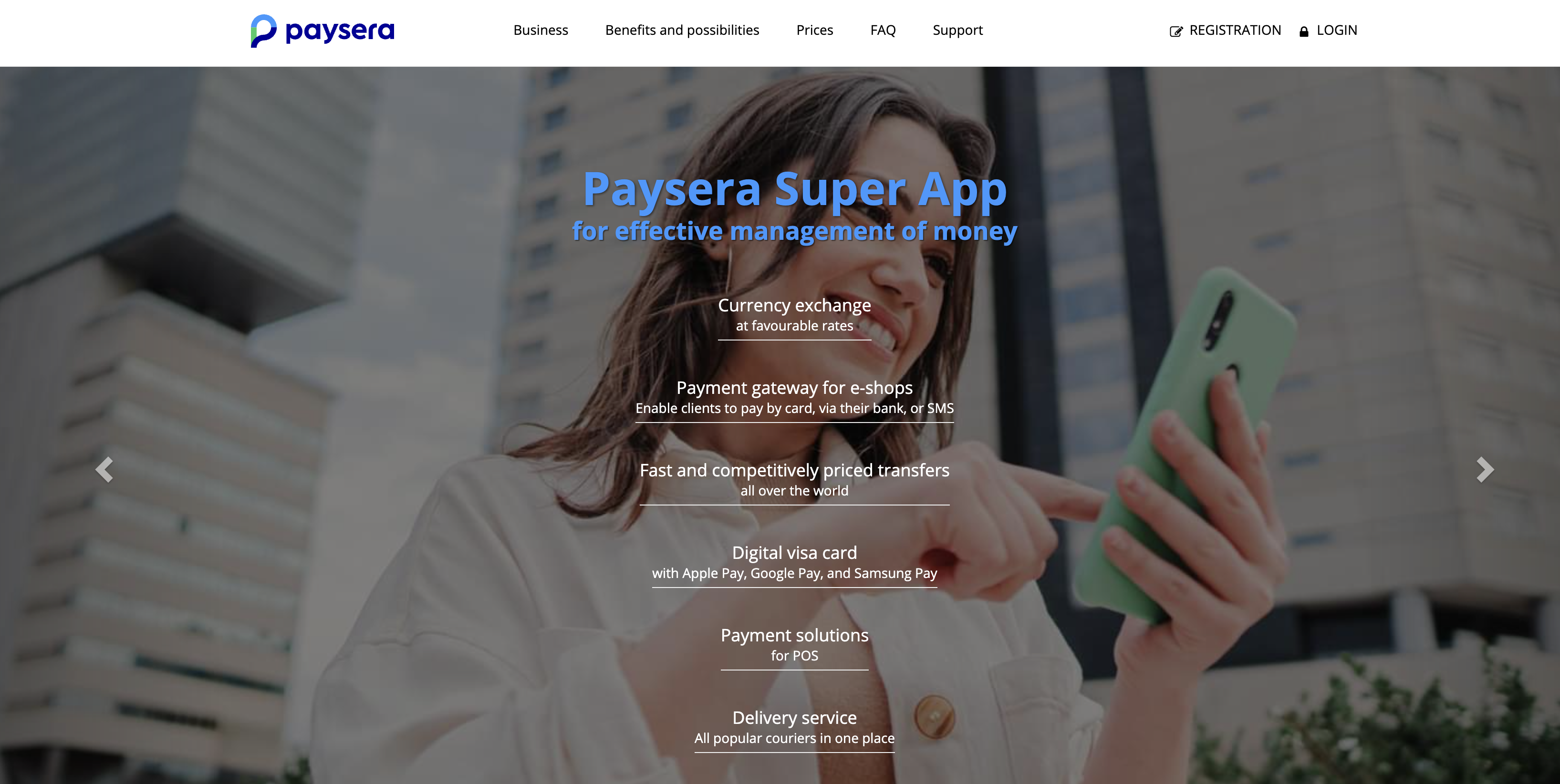
Paysera is a Lithuanian fintech company that has quietly built one of Europe's most comprehensive payment and banking platforms, serving millions of users across the continent. Rather than chasing hype, Paysera focuses on practical utility—combining payment processing, digital accounts, currency exchange, and invoicing tools into a single interface that works across borders and languages. The platform powers everything from freelancers managing invoices to SMEs handling payroll, while also offering consumer-facing services like multi-currency wallets and competitive exchange rates. What sets Paysera apart is its unglamorous pragmatism: it solves real friction in how Europeans move, spend, and manage money across different countries, without the startup theatrics. It's the kind of company that doesn't dominate headlines but has become indispensable infrastructure for a significant portion of the continent's digital economy. In the crowded European fintech landscape, where newer players chase consumer attention and legacy banks chase compliance, Paysera operates in the profitable middle—trusted by businesses and individuals who value reliability and cross-border simplicity over brand prestige.
Categories
Financial InfrastructurePaymentsDigital BankingSME Finance
rauva.com
Rauva
rauva.com🇵🇹 Portugal
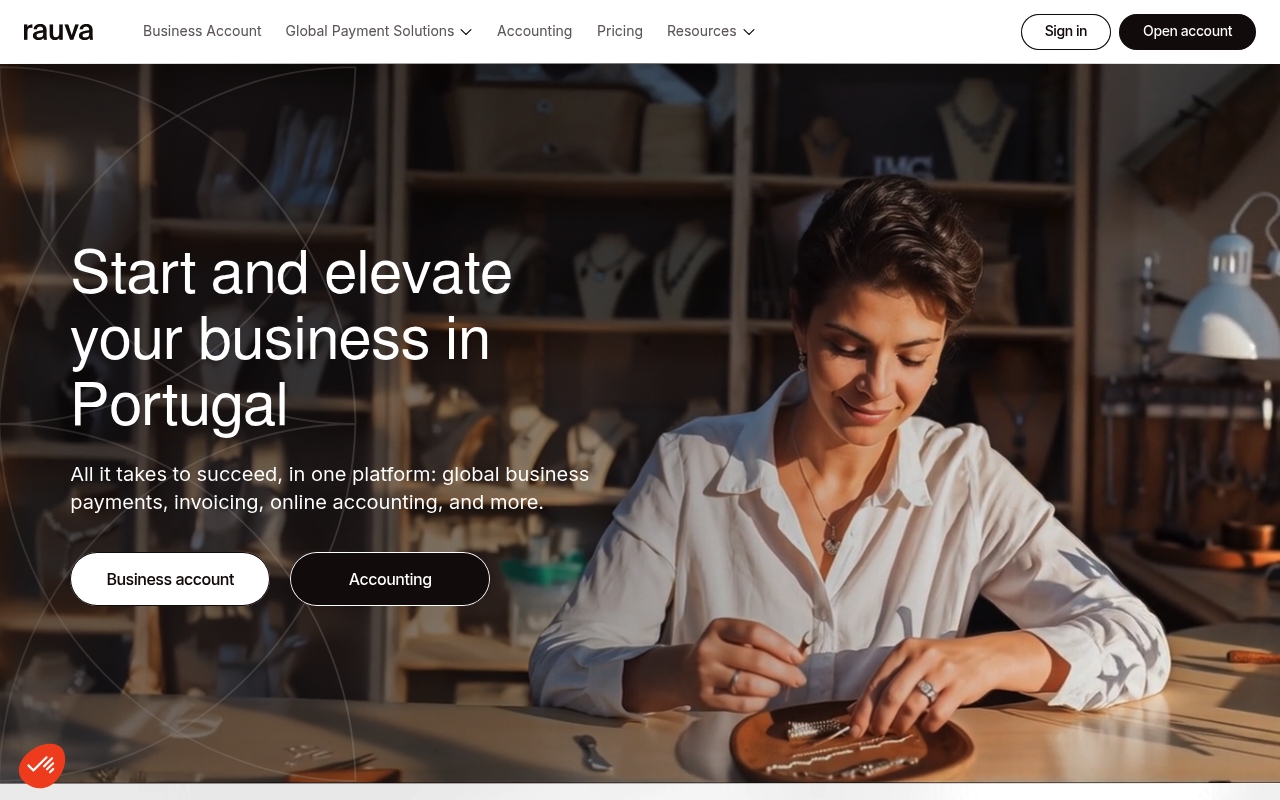
Rauva is a fintech platform built specifically for small business owners who are tired of juggling spreadsheets and fragmented tools. It combines invoicing, expense tracking, and financial reporting into a single dashboard, giving SMEs real-time visibility into their business finances without the accountant overhead. The platform connects directly to bank accounts and automatically categorizes transactions, turning raw financial data into actionable insights.
What sets Rauva apart is its focus on simplicity and speed. Rather than forcing businesses through complicated setup processes or charging enterprise-level fees, it delivers straightforward features that address the immediate pain points SMEs face: understanding cash flow, managing invoices, and staying on top of tax obligations. The interface feels built for people who run businesses, not for finance professionals.
In the crowded landscape of SME fintech, Rauva competes by refusing complexity. While competitors bundle accounting, payroll, and inventory management into bloated suites, Rauva stays laser-focused on financial visibility and reporting. It's the kind of tool a busy founder pulls up on Monday morning without needing a training session. The company has positioned itself as the alternative to traditional accounting software that feels stuck in the 2000s and overly expensive cloud-based platforms that are overkill for small teams.
Rauva represents the practical middle ground in SME finance: powerful enough to matter, simple enough to use.
Categories
SME FinancePersonal Finance
finastra.com
Finastra
finastra.com🇬🇧 United Kingdom
Finastra is a London-based financial software giant that powers the plumbing behind modern finance. Rather than chasing consumers with flashy apps, Finastra builds the invisible infrastructure that banks, investment firms, and capital markets players depend on to operate. Think of it as the operating system for institutional finance—the sort of company most people have never heard of but whose systems process trillions in transactions daily.
The company's portfolio spans core banking systems, treasury management platforms, capital markets solutions, and lending technology. Finastra operates at the intersection of legacy finance and digital transformation, helping traditional institutions modernize their backend without scrapping decades of accumulated complexity. For banks and brokers, Finastra's software is often indispensable—the kind of vendor you can't easily replace once integrated into your operations.
In the European market, Finastra competes with other heavyweight infrastructure players but stands out for its broad coverage across retail, corporate, and capital markets segments. The company has grown partly through acquisition, absorbing competitors and bolt-on technologies to expand its ecosystem. It's not the startup disrupting finance from the margins; it's the entrenched platform that established institutions lean on to survive and scale.
Categories
Financial InfrastructureSME FinanceCapital MarketsLendingTreasury
plandelta.com
PlanDelta
plandelta.com🇩🇪 Germany
Private equity and corporate finance practitioners spend a remarkable share of their working time on financial modelling tasks that have not changed substantively in twenty years — building DCF models, LBO models, and scenario analyses in Excel templates that are passed between analysts, marked up by partners, and remain the lingua franca of deal evaluation despite the obvious limitations of the medium. PlanDelta was founded in Germany in 2019 to bring modern software approaches to that workflow. Its platform supports financial modelling, scenario planning, and deal evaluation for corporate finance teams and investment professionals, replacing or augmenting Excel-based processes with collaborative tools designed for the specific demands of transaction work. The product targets the gap between the spreadsheet world that defines most deal work and the enterprise FP&A platforms that serve very different use cases. In the European corporate finance technology landscape, the willingness of investment professionals to move workflows out of Excel has historically been limited — the medium is universal, the templates are inherited, and the switching costs are high. Companies building products in this space need to demonstrate that their tools genuinely improve the quality and speed of analysis rather than just changing the interface. PlanDelta is building toward that demonstration in a market where the resistance to new tools is real but the underlying need for better analytical infrastructure is genuine.
Categories
Capital MarketsSME Finance
ebury.com
Ebury
ebury.com🇬🇧 United Kingdom
Ebury is a London-based fintech that's quietly become one of Europe's most ambitious cross-border payment platforms for small and mid-sized businesses. Built for founders and finance teams who spend too much time juggling currency conversions, hedging risk, and waiting days for international transfers, Ebury strips away the friction that traditional banks left behind.
The platform handles the full spectrum of what mid-market companies actually need: sending money across borders at better rates, managing foreign exchange exposure without needing a treasury team, collecting payments in dozens of currencies, and—increasingly—accessing working capital tied to those flows. It's not a flashy consumer app; it's infrastructure that makes international growth less exhausting.
Unlike the volume-chasing payment processors or the idealistic startups that oversimplified cross-border payments, Ebury positioned itself as the pragmatic middle ground. It embedded deep relationships with regional banks while building technology that works at scale. The company has expanded beyond its British roots into major European markets, growing a client base that ranges from e-commerce sellers to manufacturing firms that actually need sophisticated FX management, not just cheaper wires.
Ebury represents a maturing fintech category: the infrastructure play that's neither a bank nor a simple API, but rather a new kind of financial operating system for companies doing serious international business.
Categories
PaymentsDigital BankingTreasurySME Finance