Country
Companies10 of 33
tink.com
Tink
tink.com🇸🇪 Sweden
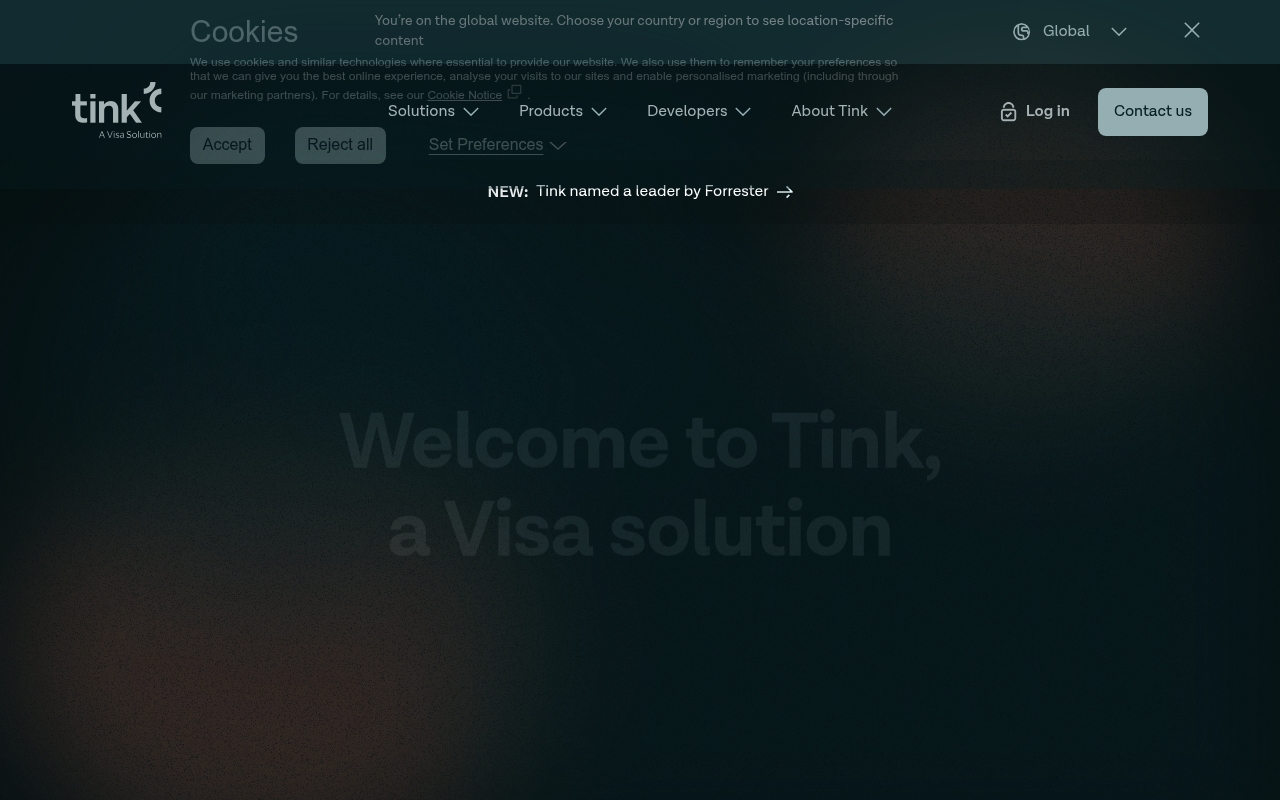
Tink is a Swedish open banking platform that connects to over 3,000 financial institutions across Europe, solving the friction between fintech ambition and banking reality. Rather than building their own infrastructure from scratch, startups and established financial companies plug into Tink's APIs to instantly access account data, initiate payments, and orchestrate complex financial workflows without dealing with legacy banking plumbing.
The company sits at the intersection of three powerful trends: the shift toward embedded finance, the regulatory tailwinds of PSD2 and Open Banking, and the growing irrelevance of traditional bank APIs. While competitors chase headlines with consumer-facing apps, Tink operates in the less glamorous but infinitely more valuable B2B2C layer—the infrastructure that quietly powers dozens of European fintech winners.
What sets Tink apart is execution at scale. Their data aggregation and payment initiation services work reliably across fragmented European banking systems, which is harder than it sounds. Most fintechs eventually realize they need a Tink-like layer to escape the nightmare of maintaining connections to hundreds of banks with different technical standards and frequent updates.
That importance hasn’t gone unnoticed. In 2022, Tink was acquired by Visa, a move that underscored just how critical open banking infrastructure has become. The acquisition gave Tink both validation and reach, positioning it even closer to the core of the global payments ecosystem.
Tink represents the unglamorous backbone of modern European fintech—the kind of company that doesn't dominate headlines but becomes quietly indispensable to everyone building financial products.
Categories
Open BankingFinancial InfrastructureEmbedded Finance
adyen.com
Adyen
adyen.com🇳🇱 Netherlands
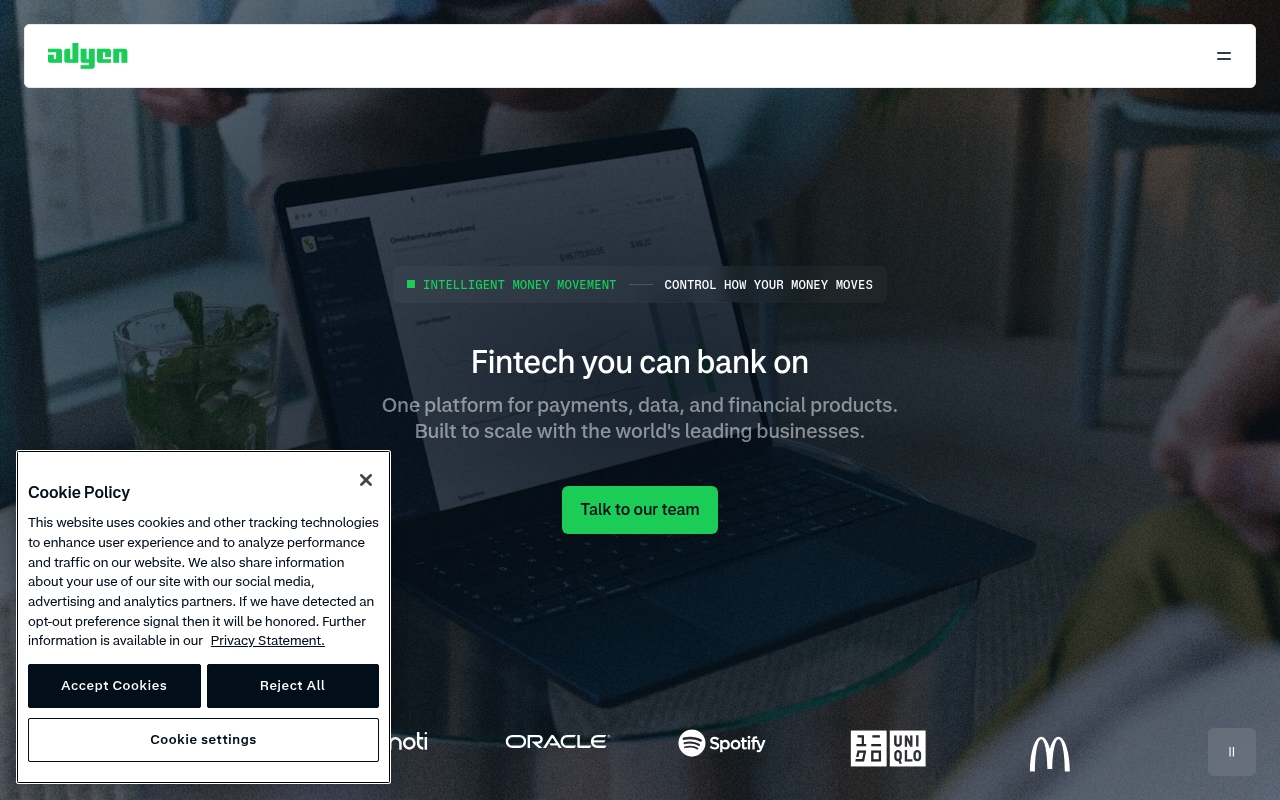
Adyen is the global payments infrastructure that powers the world's biggest brands. Founded in Amsterdam and now operating across every major market, it's the connective tissue between retailers, their customers, and the financial system—processing everything from online checkouts to in-store transactions to marketplace payouts in a single, unified platform.
What sets Adyen apart is its refusal to operate as a traditional payments middleman. Instead of bolting together separate processors, gateways, and acquirers, it built its own infrastructure from the ground up, meaning faster settlement, lower friction, and genuine transparency on what you're actually paying. You see this philosophy everywhere: merchants get real-time visibility into their payments, developers integrate once and reach hundreds of payment methods, and the company has stayed agnostic to trends—it processes crypto as easily as it processes credit cards, embedded payments as easily as it processes commerce.
In a market crowded with legacy processors and upstart fintechs, Adyen occupies a unique position: it's genuinely global without being a sprawling conglomerate, technically sophisticated without being inaccessible, and profitable without relying on venture capital.
For enterprises serious about payments—whether they're selling fashion, booking flights, or managing marketplaces—Adyen represents the modern alternative to fragmented, outdated payment stacks.
Categories
PaymentsFinancial InfrastructureEmbedded Finance
payhawk.com
Payhawk
payhawk.com🇧🇬 Bulgaria
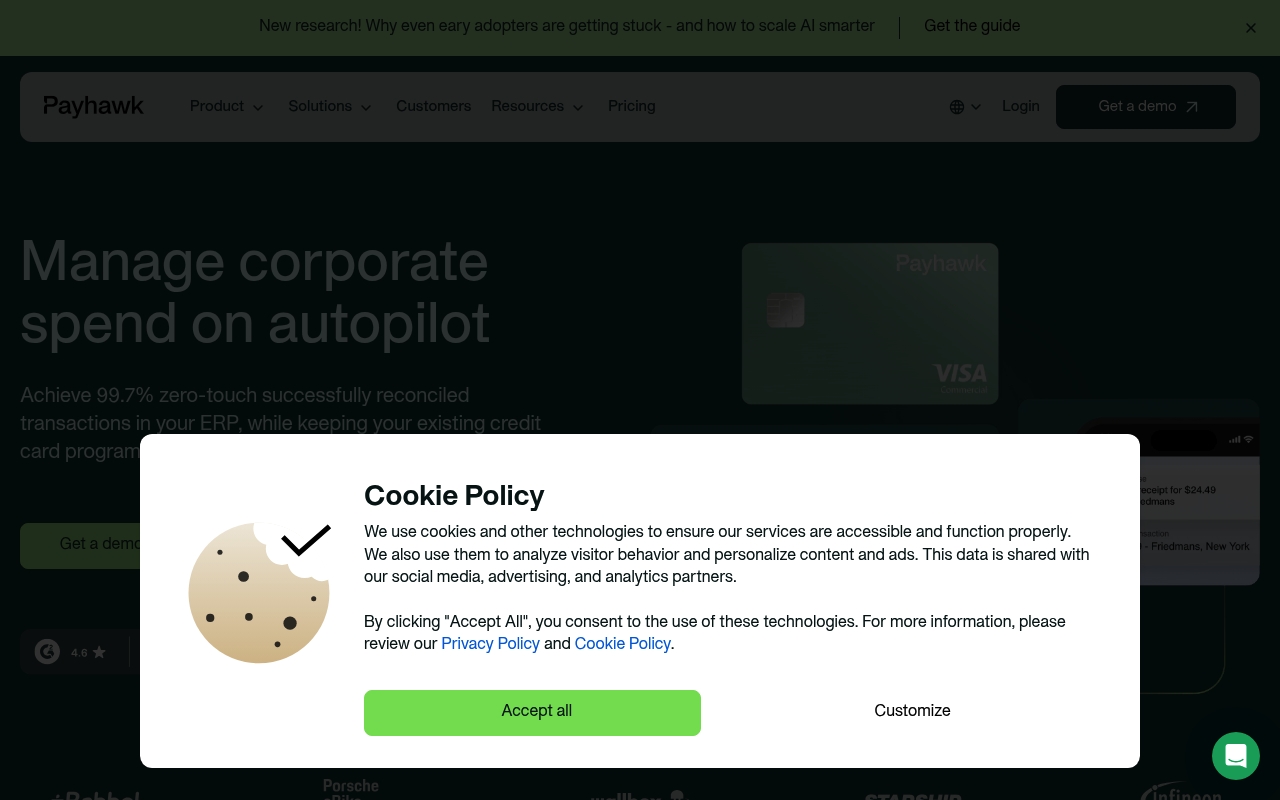
Most companies still manage corporate spending the way they did a decade ago—expense reports, manual reconciliation, scattered receipts. Payhawk has built something radically simpler: a unified spending platform that gives finance teams complete visibility into every company transaction, from the moment it's authorized to the moment it's reconciled. The platform combines physical and virtual cards, automated expense management, and real-time spend controls in a single dashboard.
What sets Payhawk apart in the crowded corporate finance space is its refusal to compromise on user experience. Employees aren't fighting clunky interfaces or wrestling with legacy systems. Instead, they get an intuitive mobile app that feels like personal fintech, while finance teams gain the analytical firepower to actually manage policy, catch fraud, and optimize spending patterns. The company treats visibility not as a nice-to-have but as the foundation of control.
In Europe's SME and mid-market space, where most alternatives still rely on outdated card programs or disconnected software suites, Payhawk's integration of issuance, spend management, and analytics represents a meaningful shift. The company has quietly built something that enterprises have wanted for years: a spending platform that doesn't require compromise between employee experience and financial governance. For finance leaders tired of spreadsheets and reactive reporting, it's become the natural choice.
Categories
SME FinanceDigital BankingEmbedded Finance

payhip.com
Payhip
payhip.com🇬🇧 United Kingdom
Payhip lets creators and small businesses sell directly to their audience without the usual gatekeeping. It's a all-in-one commerce platform that handles digital products, physical goods, subscriptions, and memberships—essentially a Shopify alternative built for creators who want simplicity and fair pricing.
The platform lives in that sweet spot between marketplace and self-hosted store. You upload your product, set your price, share a link, and start selling. No approval process, no middleman deciding what you can or can't do. Payhip takes a percentage of each sale rather than charging upfront fees, which resonates with bootstrapped creators and solopreneurs who don't have predictable revenue yet.
What sets Payhip apart is its lightness. While traditional payment processors demand integration work and setup headaches, Payhip is deliberately frictionless—you can be live within minutes. It also gives sellers control over their own affiliate networks and customer relationships, something most platforms charge extra for or restrict.
In the crowded world of creator monetization tools, Payhip occupies the pragmatic middle: more powerful than a simple payment link, simpler than a full ecommerce platform, and designed specifically for people who want to sell without becoming a software engineer. It's quietly influential in how independent creators think about direct sales.
Categories
Embedded FinancePayments
montonio.com
Montonio
montonio.com🇪🇪 Estonia
E-commerce growth in Central and Eastern Europe has accelerated significantly through the 2020s, and the payment infrastructure supporting that growth has needed to evolve from supporting basic card acceptance to providing the full range of payment methods, BNPL options, and merchant tools that modern e-commerce expects. Montonio was founded in Tallinn in 2018 to build that infrastructure for the CEE market specifically. Its platform offers payment processing, BNPL integration, and merchant commerce tools designed for Baltic and broader Central European e-commerce businesses, with a particular focus on the integration depth and local payment method coverage that international platforms underserve. The company has grown rapidly across Estonia, Latvia, Lithuania, Poland, and other CEE markets, building merchant relationships and product capability in markets where the e-commerce growth opportunity is significant but where the international payment platforms have not invested with the same depth as in Western Europe. In the European payments landscape, the regional specialist model has shown durable competitive advantages in markets where local payment preferences are distinct, and Montonio represents the new generation of CEE payment infrastructure built for the post-2020 e-commerce environment rather than retrofitted from older payment systems.
Categories
PaymentsBNPLEmbedded Finance
yapily.com
Yapily
yapily.com🇬🇧 United Kingdom
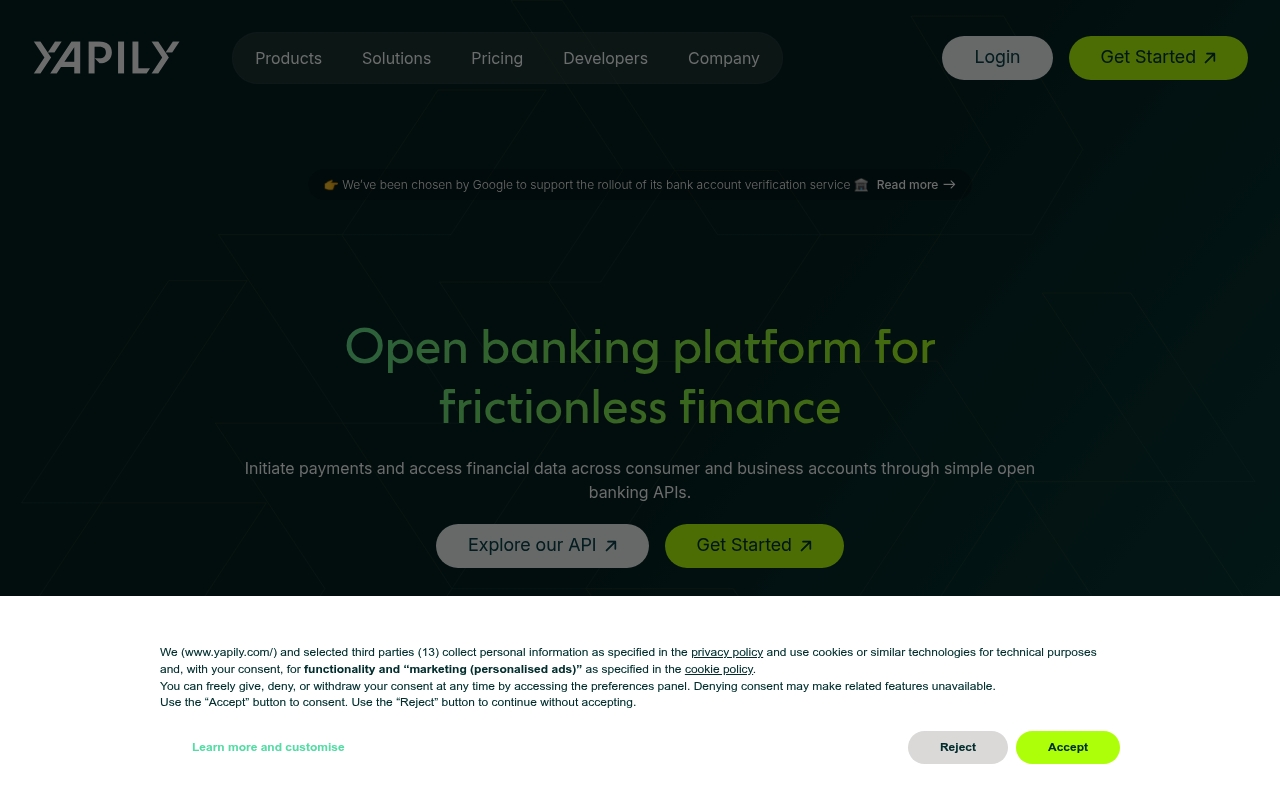
Yapily sits at the intersection of open banking and embedded finance, building the plumbing that lets fintech companies and enterprises tap into banking data and payments without reinventing the wheel. Founded in 2016, the London-based company operates as an API infrastructure layer—connecting to banks across Europe and beyond to unlock account information, payment initiation, and consent management at scale.
What makes Yapily different is how it abstracts away the complexity of working with hundreds of banks and their inconsistent technical standards. Rather than forcing developers to build individual integrations for each bank's API, Yapily provides a unified interface that normalizes everything. It's the translator between your app and the messy reality of legacy banking infrastructure.
The company operates in the B2B2C space, partnering with fintechs, neobanks, and enterprise software providers who need banking connectivity but lack the resources to build it themselves. Their customer base spans lending platforms, wealth apps, accounting software, and payment orchestration layers—essentially anyone whose product benefits from real-time access to customer bank accounts or the ability to initiate payments.
Yapily's positioning is deliberately unsexy: they're infrastructure, not consumer-facing. But that's precisely the point. In a landscape crowded with consumer fintechs chasing headlines, Yapily has built a quiet, profitable business serving the builders themselves. They're to open banking what Stripe is to payments—the backbone that lets innovation happen faster.
Categories
Open BankingFinancial InfrastructureEmbedded Finance
wallester.com
Wallester
wallester.com🇪🇪 Estonia
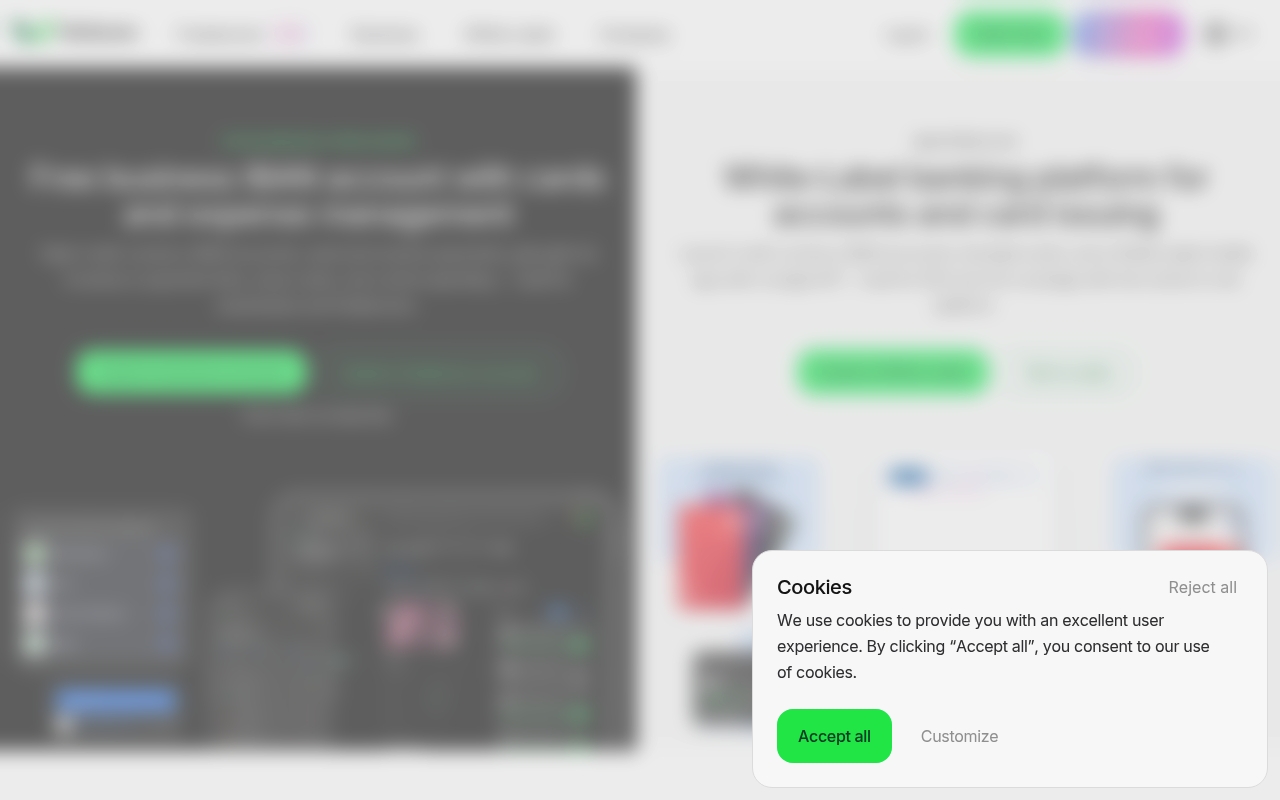
Wallester is a European fintech infrastructure company that makes it simple for other businesses to issue, manage, and distribute payment cards at scale. Rather than wrestling with legacy banking systems and complex integrations, companies use Wallester's APIs and platforms to embed card programs directly into their own products—think neobanks, fintechs, and platforms that need white-label card solutions without the operational overhead. The company handles the technical plumbing: card issuance, real-time transaction processing, compliance, and customer-facing controls, all delivered through clean, developer-friendly APIs. Wallester operates across multiple European markets and works with everyone from emerging challenger banks to established financial institutions looking to modernize their card infrastructure. What sets Wallester apart is its focus on removing friction from the card-issuing process. Most issuers are bound to cumbersome core banking relationships or have to build entirely custom solutions. Wallester sits in the middle, offering a turnkey platform that scales with demand without forcing companies to reinvent core banking. It's become a quiet backbone for European fintechs that need cards fast, reliably, and without the bureaucracy. The company represents a broader trend in fintech infrastructure: the unbundling of banking services into modular, API-first components that let smaller players compete with traditional incumbents.
Categories
Financial InfrastructurePaymentsEmbedded Finance

finleap.com
finleap
finleap.com🇩🇪 Germany
finleap is Berlin's answer to a question the European fintech scene keeps asking: how do you build world-class financial companies at scale? Rather than chase unicorn valuations, finleap builds them. The holding company operates as a fintech factory, incubating and scaling financial startups from day one with institutional backing, operational expertise, and a network that spans regulators, banks, and investors across the continent.
What sets finleap apart is the architecture itself. It's not an accelerator or a VC fund—it's a purpose-built engine for creating and nurturing fintech companies. Each portfolio company gets access to finleap's infrastructure, compliance playbooks, and go-to-market templates, which compresses timelines and eliminates the friction that typically derails early-stage fintechs. The model works: companies like Wayfair-backed Finn, B2B payments platform Foxpay, and lending marketplace Evala have all emerged from the finleap stable.
Internally, finleap operates across payments, lending, wealth, and embedded finance—categories where the European market remains genuinely underpenetrated compared to the US. The company's thesis is straightforward: identify white space in financial services, build products faster than traditional banks can move, and create defensible market positions through technology and user experience. It's less about disruption theater and more about pragmatic value creation.
Finleap sits at an interesting intersection in the European fintech landscape: large enough to command resources and regulatory relationships, independent enough to move quickly, and structured in a way that lets founders maintain autonomy while tapping institutional muscle. For a continent that produces good fintech companies but struggles with scaling, finleap represents a new playbook.
Categories
PaymentsDigital BankingLendingWealthFinancial InfrastructureEmbedded Finance
marketfinance.com
Kriya
marketfinance.com🇬🇧 United Kingdom
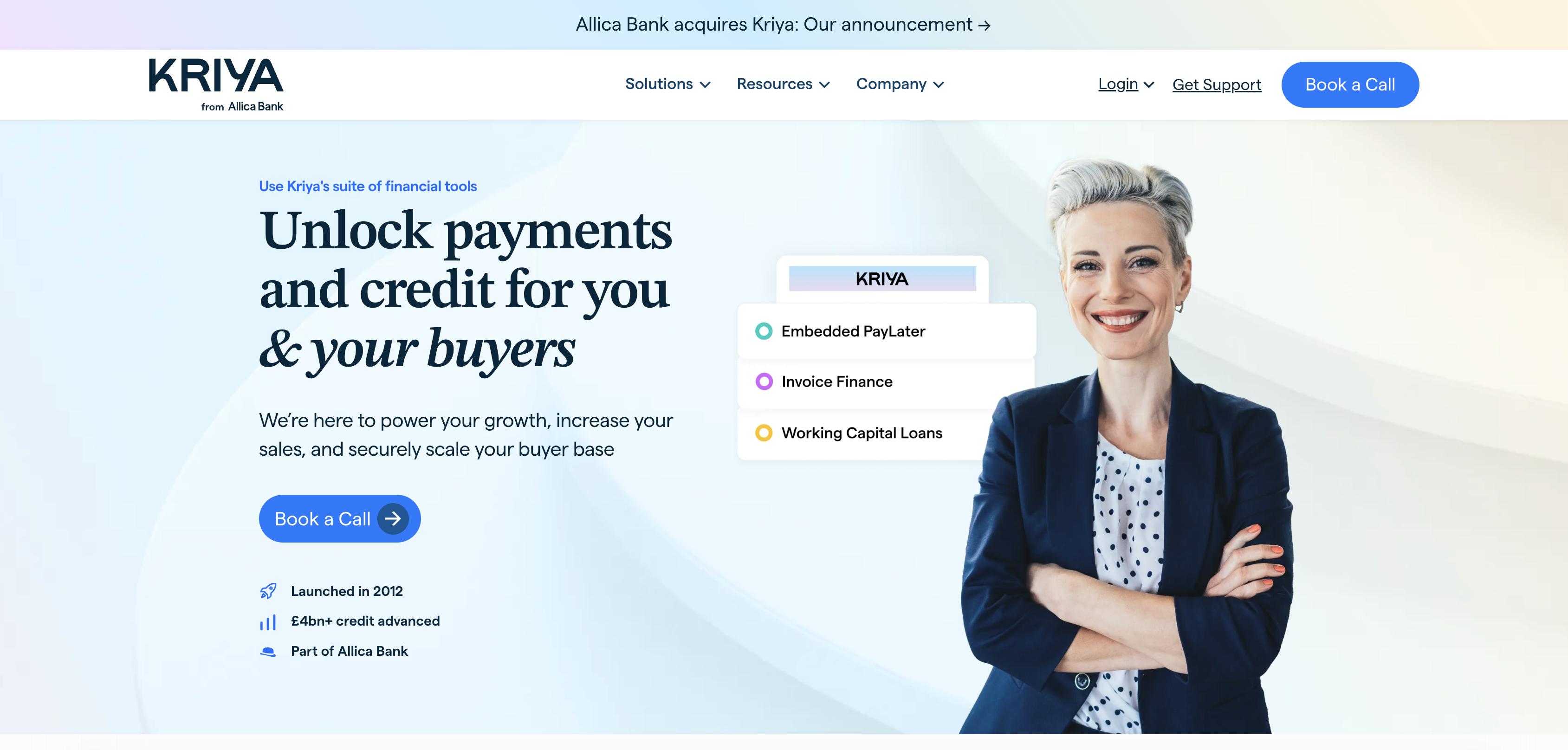
Kriya sits at the intersection of commerce and credit, rethinking how European merchants access working capital. Rather than the traditional bank lending playbook—lengthy applications, months of waiting, opaque terms—Kriya embeds financing directly into the payment flow. When a business processes a transaction through Kriya, the platform instantly evaluates creditworthiness based on real transaction data, not balance sheets. The result is faster access to capital at the moment merchants need it most.
The platform works seamlessly with merchant acquiring, allowing small and mid-sized businesses to blend payment processing with financing. Instead of juggling separate vendors, merchants get a unified experience: payments infrastructure plus flexible credit lines that scale with their sales velocity. Kriya's approach treats transaction history as the ultimate credit signal, moving beyond the gatekeeping that has historically excluded smaller retailers.
In a European market where SME access to working capital remains fragmented and slow, Kriya represents a material shift in how commerce and finance interlock. By embedding lending into the payment layer, the company removes friction at exactly the point where merchants are most motivated to borrow. This positions Kriya as infrastructure for the next generation of merchant finance—where creditworthiness is determined by data, not bureaucracy.
Categories
PaymentsLendingSME FinanceEmbedded Finance
credimi.com
Credimi
credimi.com🇮🇹 Italy
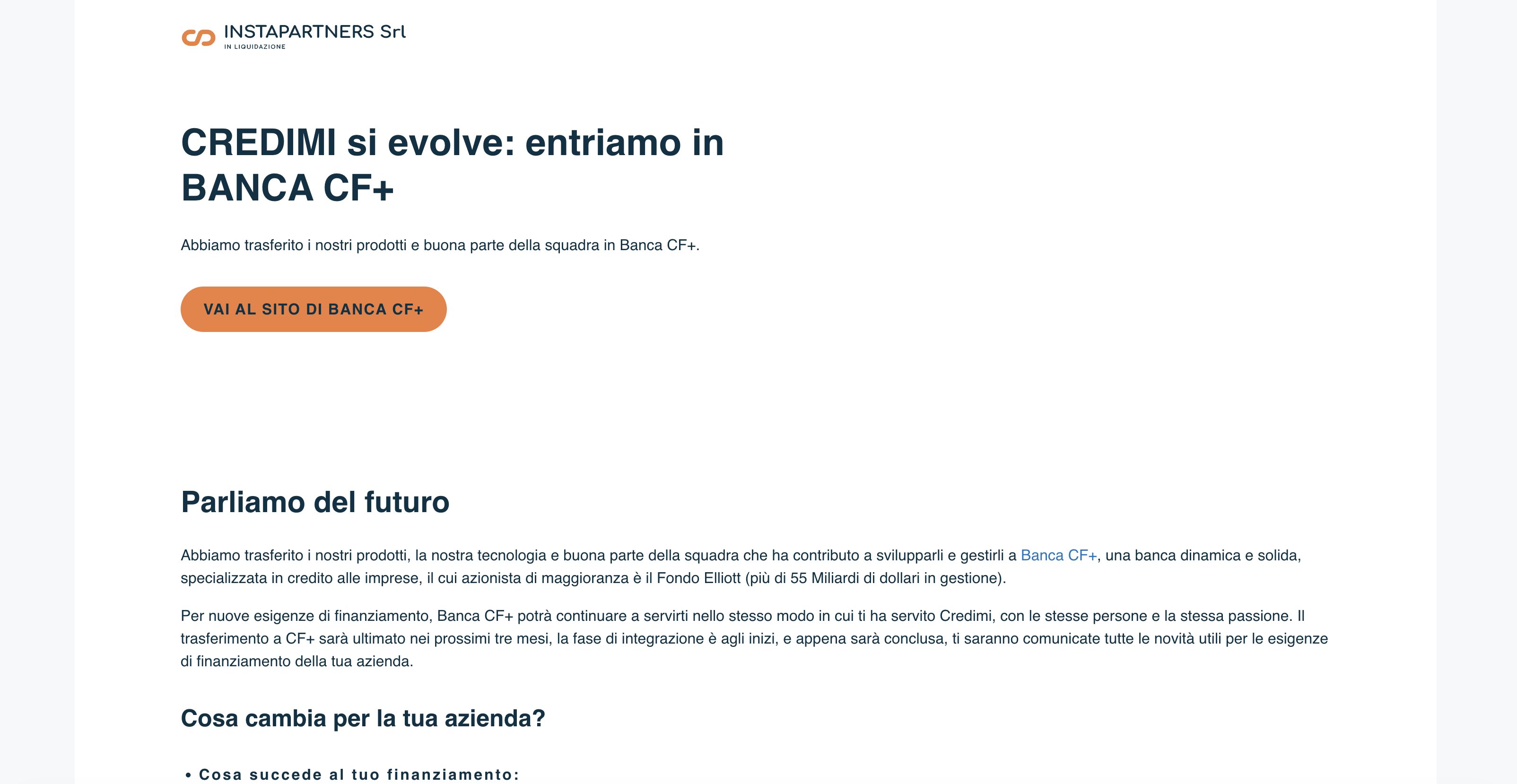
Credimi sits at the intersection of e-commerce and embedded finance, solving a problem that online retailers have largely ignored: making checkout friction disappear. Rather than forcing customers to choose between card payments and bank transfers, Credimi lets shoppers access buy-now-pay-later directly at the point of sale, turning the checkout moment into a financing decision rather than a payment one. The company essentially white-labels installment lending for merchants, handling everything from credit decisioning to collections behind the scenes.
What sets Credimi apart in a crowded BNPL market is its focus on the merchant relationship rather than the consumer one. While competitors chase customer loyalty through branded apps and direct marketing, Credimi takes a B2B approach, embedding its credit engine into partner payment flows and e-commerce platforms. This means retailers get better conversion rates without bearing the customer acquisition cost. The company operates across multiple European markets, particularly strong in the Nordics and DACH region, where fintech-native commerce has matured fastest.
In an industry obsessed with speed and simplicity, Credimi's real edge is its underwriting—it deploys machine learning to make instant credit decisions without the awkward friction of traditional lending. This isn't flashy consumer fintech; it's infrastructure. But it's exactly what online retailers need to compete in markets where BNPL has become table stakes.
Categories
Embedded FinanceBNPL