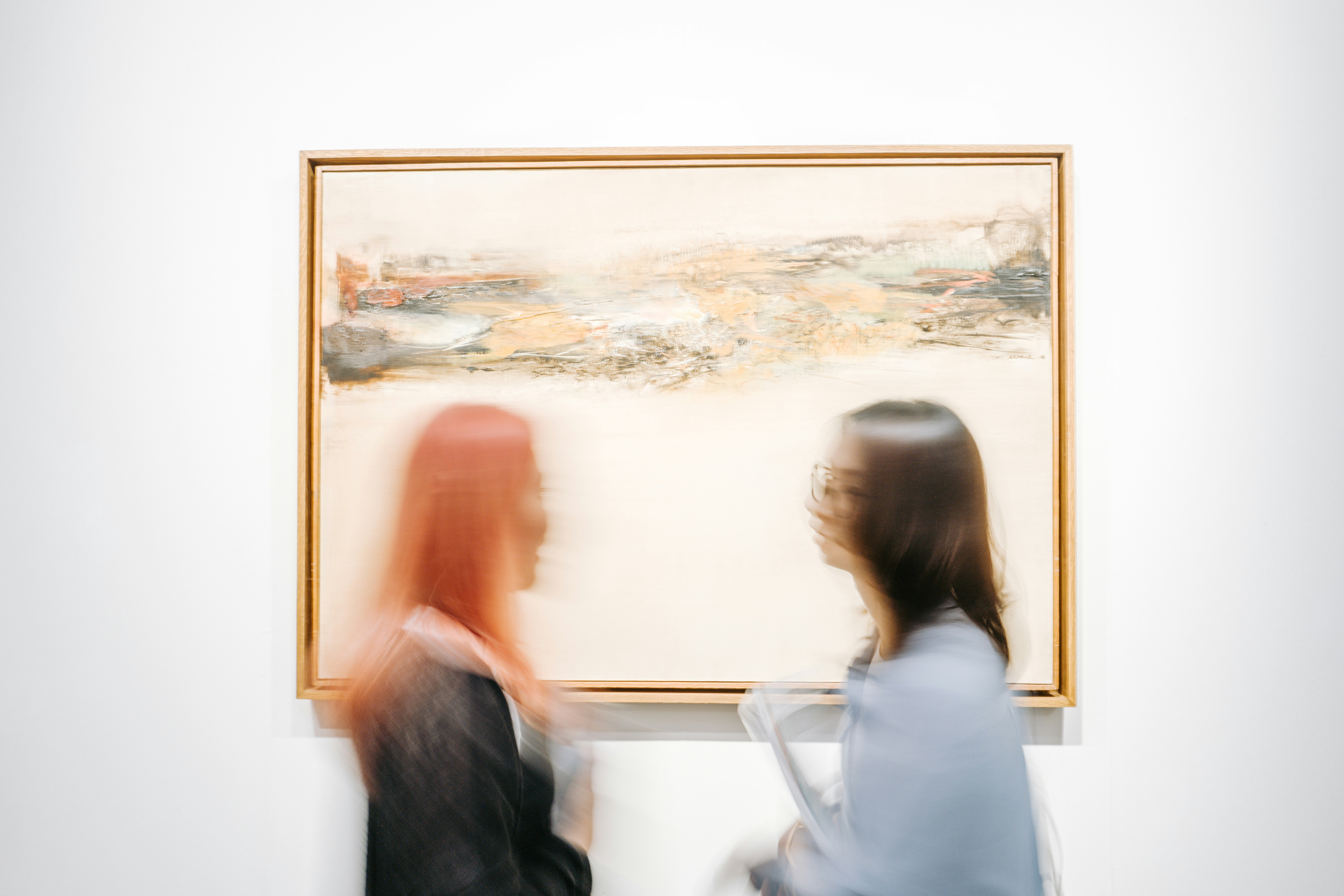
Art used to belong to rooms you couldn’t enter. White walls, quiet auctions, and price tags that felt deliberately out of reach. Now it’s starting to live on your phone.
For decades, blue-chip art operated like a private club. Access depended on relationships, timing, and capital most people didn’t have. European fintechs are beginning to open that door. Platforms are taking high-value artworks and turning them into fractional investments—splitting ownership into smaller pieces that can be bought and sold digitally. A Picasso or a Banksy no longer sits with a single collector. It’s distributed, digitized, and quietly circulating among a wider group of investors. It’s less about owning art. More about accessing it.
Fractional ownership sounds like a workaround. In reality, it’s a shift in mindset. Instead of chasing a single masterpiece, investors can spread exposure across multiple works, artists, and periods. Art starts to behave less like a one-off purchase and more like a portfolio. Platforms like Artemundi and Mintus are building around this idea—positioning art alongside traditional assets rather than outside the financial system. While traditional collectors focus on possession, fintech users focus on allocation.
The art world has always thrived on intuition. Taste, reputation, cultural relevance—factors that are hard to quantify. Fintech doesn’t replace that. It layers something else on top. Price histories, artist trajectories, market comparisons—suddenly, art comes with analytics. Investors can track performance, assess risk, and make decisions with more structure than before. It doesn’t remove the uncertainty. But it makes it legible. While galleries speak in narratives, platforms speak in numbers.
Art has never been easy to sell. A painting can sit for years before finding the right buyer. Timing matters. So does taste. Liquidity has always been limited. European fintech platforms are trying to soften that. By breaking artworks into shares, they create the possibility of secondary trading—allowing investors to enter and exit positions without waiting for a full sale. It’s not instant. It’s not frictionless. But it’s a shift away from the traditional model. While the old market moves slowly, this new layer experiments with speed.
Europe doesn’t just participate in the art market. It shapes it. Centuries of cultural history, established auction houses, and a dense network of collectors give the region a unique position. That legacy creates both opportunity and constraint. European fintechs aren’t building from scratch. They’re translating an existing system into a new format. Different platforms take different approaches—some focused on curated access, others on portfolio construction—but the direction is the same: opening a historically closed market. It’s not disruption in the loud, Silicon Valley sense. It’s adaptation.
The audience is changing. Younger investors—raised on apps, platforms, and diversified portfolios—approach art differently. Less as a status symbol, more as an alternative asset class. They’re comfortable owning fractions, comfortable relying on data, comfortable engaging with art without ever physically seeing it. While previous generations collected for identity, this one invests for exposure.
Not everyone is convinced this is progress. Turning art into financial units raises questions about meaning. Does fractional ownership reduce art to numbers? Does liquidity strip away its cultural weight? There’s a quiet tension between appreciation and optimization. Fintech platforms sit in that space—making art more accessible, while also reshaping how it’s valued.
Democratization doesn’t come without compromise. Owning a fraction of a painting isn’t the same as living with it. The emotional connection shifts. The experience becomes more abstract, more distant. But for many, that’s the point. Access matters more than exclusivity.
Art investment in Europe isn’t becoming mainstream overnight. It remains niche, still finding its rhythm. But something has changed. Technology is loosening the boundaries of a traditionally closed market. It’s introducing new ways to participate, new ways to evaluate, and new expectations around access. Art doesn’t lose its mystique. It just becomes, quietly, a little less out of reach.
Photo by Pesce Huang on Unsplash