← Glossary
What is Treasury?
Treasury management fintech serves the financial operations teams of mid-market and large companies — treasury departments responsible for cash management, liquidity planning, foreign exchange risk, short-term investments, and movement of funds across corporate bank accounts. Treasury technology helps teams move from spreadsheet-based cash management to real-time, automated, data-driven financial operations. Growing companies with complex multi-bank, multi-currency cash positions have been the primary addressable market — historically underserved by both the enterprise TMS vendors (too expensive) and standard business banking tools (too limited).
Subcategories
Bank connectivity
Bank connectivity platforms provide the technical infrastructure that allows businesses and fintechs to connect to multiple banks simultaneously — accessing account data, initiating payments, and managing cash positions across different banking relationships through a single integration. Open banking and SWIFT connectivity are both important mechanisms. Bank connectivity is the foundation of treasury management, cash flow forecasting, and multi-bank payment operations for mid-market and enterprise companies.
Cash management
Cash management platforms help treasury teams and finance departments optimise the management of liquid assets — deciding how much cash to hold in which accounts, where to invest surplus cash for short-term returns, and how to structure banking relationships to minimise idle balances and maximise interest income. For multinational companies, cash management involves pooling cash across entities and currencies to maximise the efficiency of the group's overall liquidity position.
FX management
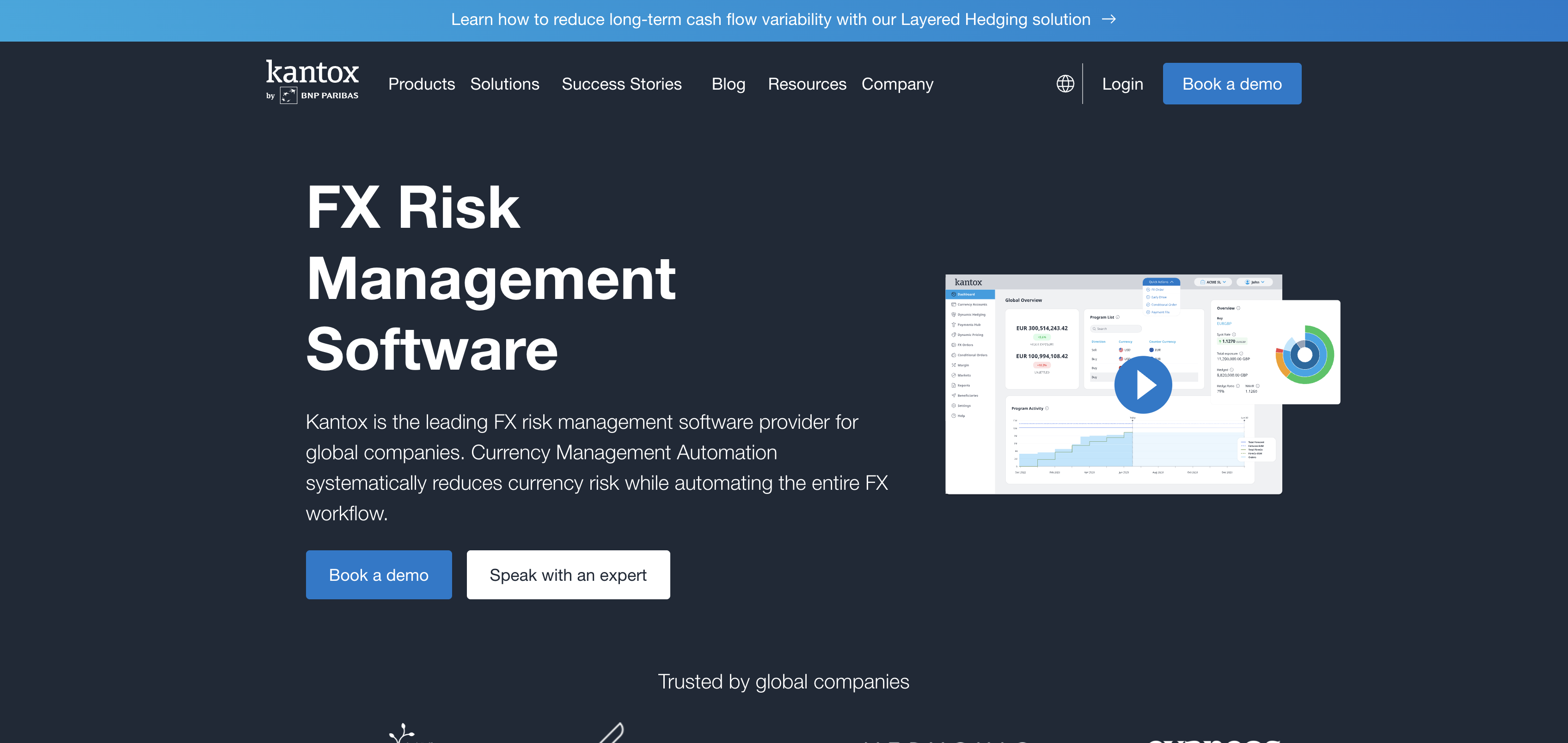
FX management platforms help businesses that operate across currencies understand, hedge, and reduce their foreign exchange exposure — providing exposure tracking, hedging analytics, and the ability to execute forward contracts and options to lock in exchange rates for future currency requirements.
Corporate payments
Corporate payment solutions manage the complex payment needs of mid-market and enterprise companies — bulk payment processing, multi-currency payments, supplier payments, intercompany transfers, and the reconciliation infrastructure that connects payments to financial records. Corporate payment platforms replace the manual, bank-portal-based processes that many finance teams rely on with automated, API-connected workflows that reduce errors and processing time.
Liquidity forecasting
Liquidity forecasting platforms help businesses predict their future cash positions — projecting inflows from receivables, outflows from payables, and the resulting net liquidity across future days, weeks, and months. Accurate liquidity forecasting allows treasury teams to avoid funding gaps, optimise short-term investment of surplus cash, and plan drawdowns on credit facilities before they are needed. Integration with banking data, ERP systems, and accounts receivable platforms automates the data collection that manual forecasting has always required.