DatabaseServicesArticlesCountriesGlossaryNewsletterRequest listing
← Glossary

What is Fraud & Security?

Fraud and security in financial services is an arms race. As payment systems have become faster, more accessible, and more digital, fraudsters have adapted — synthetic identities, account takeover, authorised push payment scams, and AI-generated deception. DORA, fully in force from January 2025, requires banks, payment companies, and related service providers to meet detailed standards for operational resilience and incident reporting. Fraud and security fintech encompasses detection platforms, behavioural analytics, case management, device intelligence, and the infrastructure that helps financial institutions make faster, more accurate risk decisions while minimising friction for legitimate customers.

Subcategories
Transaction monitoring
Transaction monitoring systems observe financial transactions continuously, looking for patterns associated with money laundering, sanctions violations, and financial crime. Unlike real-time fraud detection (which focuses on preventing individual fraudulent transactions), transaction monitoring takes a longitudinal view — identifying suspicious patterns across a customer's transaction history over time. Banks and payment companies are legally required to monitor transactions and report suspicious activity to financial intelligence units.
Identity fraud detection
Identity fraud detection focuses specifically on the fraud typologies that exploit identity — synthetic identities (fabricated personas combining real and fake data), stolen identities (using another person's credentials), account takeover (gaining unauthorised access to a legitimate account), and first-party fraud (a real person misrepresenting themselves). Identity fraud detection uses document verification, biometric checks, device intelligence, behavioural signals, and cross-reference against fraud databases to catch these patterns at onboarding and throughout the customer lifecycle.
Cybersecurity tools
Cybersecurity tools for financial services protect institutions from digital attacks — data breaches, ransomware, phishing, DDoS attacks, and insider threats. DORA, the EU's Digital Operational Resilience Act fully in force from January 2025, requires financial entities to maintain comprehensive resilience programmes including cyber threat intelligence, penetration testing, and incident response capabilities. Financial services is the most targeted sector for cyberattacks globally, making cybersecurity tooling a critical operational investment.
Payment protection
Payment protection encompasses the tools and processes that secure individual payment transactions against fraud, chargebacks, and unauthorised use. This includes 3D Secure authentication for card payments, device fingerprinting, velocity checks, geolocation verification, and machine learning models that score individual transactions for risk. Payment protection is increasingly important as instant payments reduce the window available to detect and stop fraudulent transactions before funds leave an account.
Behavioral analytics
Behavioral analytics platforms analyse how users interact with digital interfaces — typing rhythm, mouse movement, navigation patterns, swipe speed, and subtle anomalies in normal behaviour — to detect fraud, account takeover, and social engineering scams. Behavioural biometrics is particularly powerful for detecting authorised push payment (APP) fraud, where a legitimate user has been manipulated into authorising a fraudulent transaction. The user's behaviour during the session can reveal coercion or distress even when credentials are technically valid.
European Fraud & Security companies in our database

Hawk
Hawk🇩🇪
Est. 2019

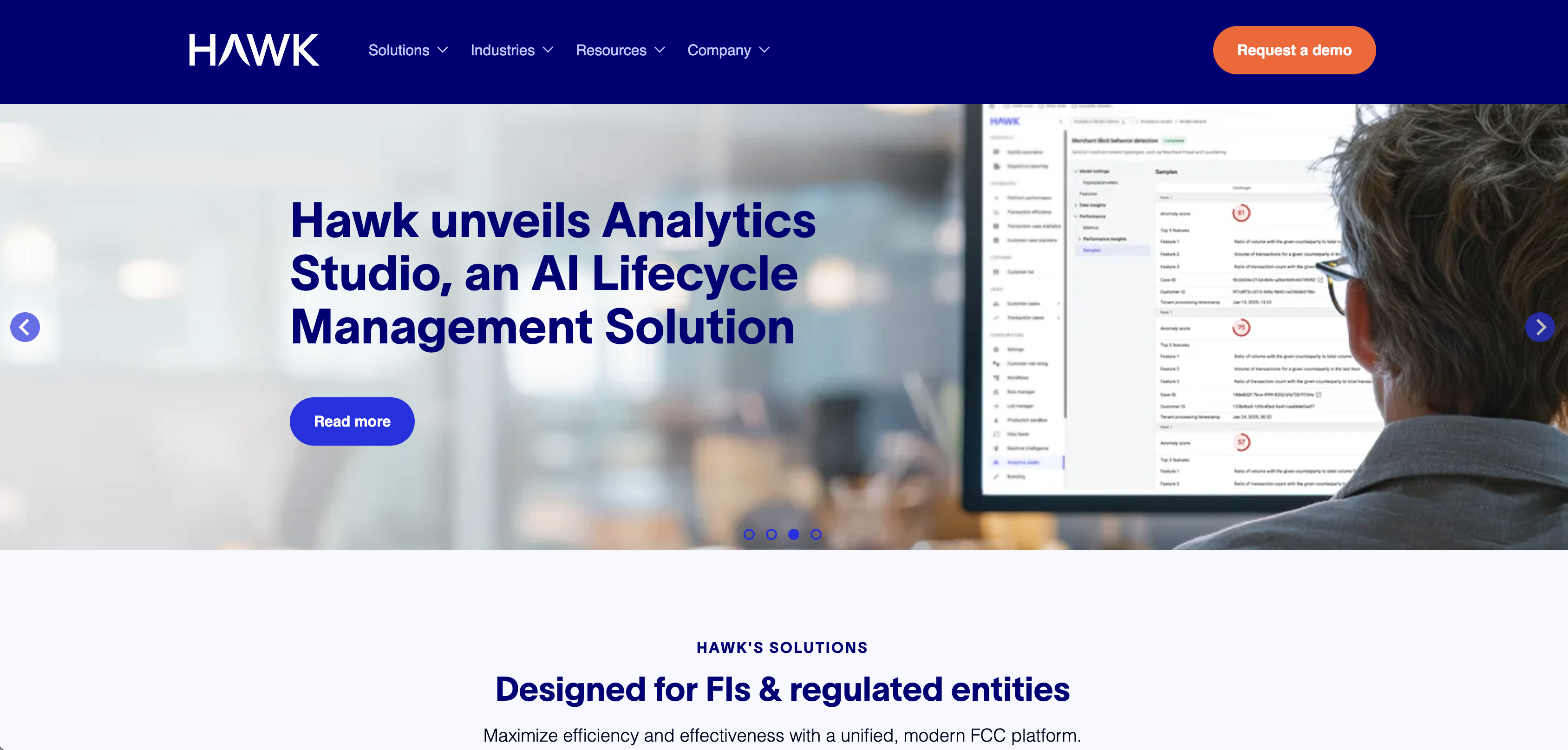
Hawk brings machine learning firepower to financial crime detection, sitting at the intersection of compliance and computational intelligence. Rather than relying on static rule sets that miss novel fraud patterns, Hawk deploys adaptive algorithms that learn from transaction behavior in real time, catching what traditional systems let slip through the cracks. The platform ingests transaction data across multiple channels—payments, transfers, accounts—and surfaces suspicious activity before it becomes a problem. For banks and fintechs drowning in false positives from legacy systems, Hawk promises a different approach: smarter, faster, less noise. Its technology sits on the boundary between compliance necessity and operational efficiency, helping institutions detect actual threats rather than gaming alert thresholds. In an environment where financial crime is increasingly sophisticated and regulatory pressure unrelenting, Hawk positions itself as the thinking alternative to checkbox compliance, offering institutions a genuine competitive edge in the race to stay ahead of bad actors.

Evervault
Evervault🇮🇪
Est. 2020

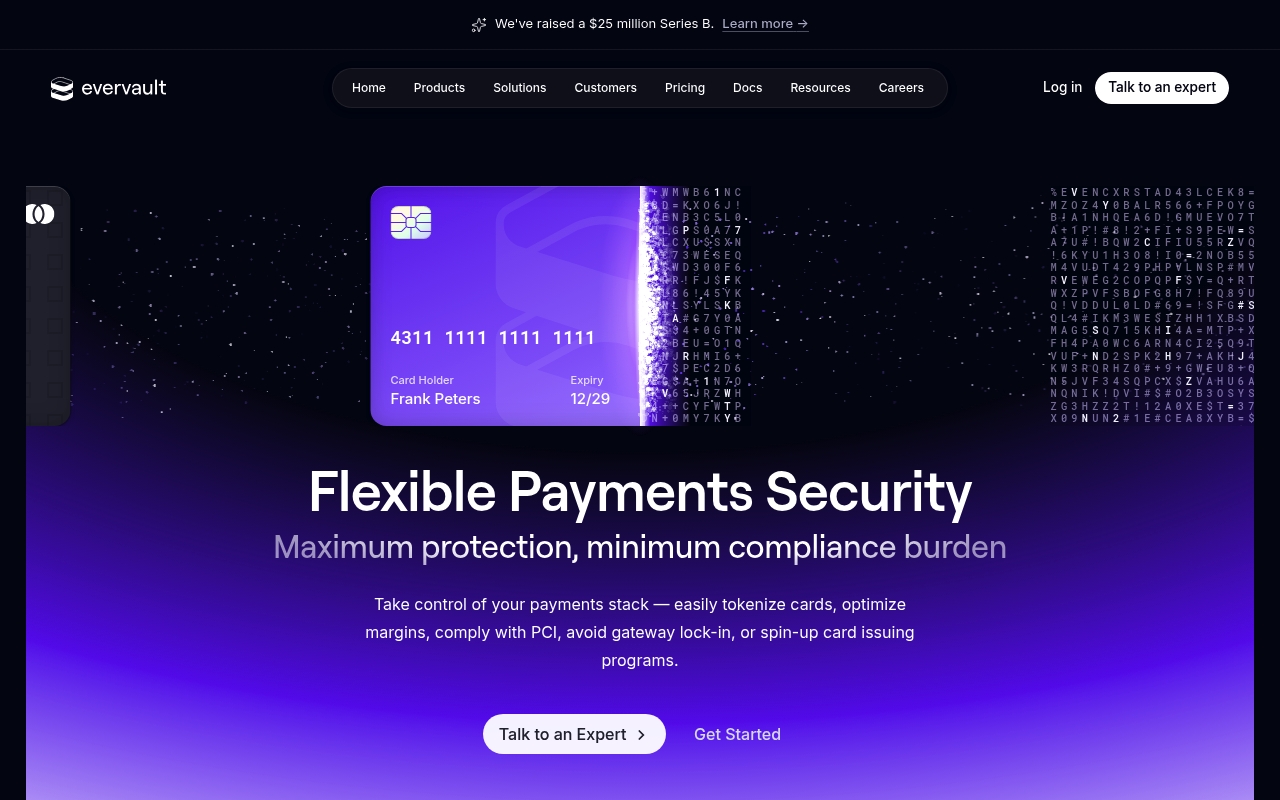
Evervault is a European cryptography company that lets developers encrypt sensitive data in transit and at rest without rearchitecting their systems. Rather than forcing teams to build custom encryption pipelines or rely on legacy HSM infrastructure, Evervault provides APIs and SDKs that integrate directly into applications—turning what was once a compliance headache into a developer experience problem. The company operates at the infrastructure layer, sitting between your database and your users. It handles encryption orchestration, tokenization, and secure computation without requiring you to manage keys or understand the underlying cryptography. This means your data stays encrypted in your own cloud account, your keys stay with you, and third-party vendors never see plaintext information. In a European market where data residency and privacy regulations have teeth, Evervault solves a real problem: companies need to protect customer data but can't afford to rebuild their entire tech stack. The platform works with existing databases, APIs, and infrastructure, making compliance less of an engineering ordeal. Evervault positions itself as the encryption layer for modern applications—not a database replacement, not a VPN, but the plumbing that makes data protection feel native to your code. It's particularly relevant for fintech companies handling payment cards, personal identifiers, and healthcare records across distributed systems. The company is helping reshape how European companies think about security: not as an afterthought, but as architecture.

ComplyAdvantage
ComplyAdvantage🇬🇧
Est. 2014

Compliance has become the unglamorous backbone of fintech, and ComplyAdvantage is the infrastructure that makes it actually work. The London-based company builds AI-powered screening and monitoring systems that help banks, fintechs, and payment platforms stay ahead of regulatory demand without drowning in noise. Rather than bombarding clients with false positives, ComplyAdvantage's platform learns from transaction patterns and risk signals to flag what actually matters—sanctions evasion, money laundering, terrorist financing, and the shadier corners of global finance. It's compliance automation that doesn't feel like compliance automation. The company serves everyone from established banks tightening their KYC processes to crypto platforms that desperately need credibility with regulators. In a landscape where AML failures cost institutions hundreds of millions in fines, ComplyAdvantage occupies the unglamorous but essential role of making sure your compliance team can actually sleep. The platform has become foundational across Europe and beyond, trusted by institutions that can't afford to miss a single regulatory trick. In the broader fintech stack, ComplyAdvantage represents the maturation of compliance—from spreadsheet-driven checklist to intelligent, real-time risk machine.

Ravelin
Ravelin🇬🇧
Est. 2014

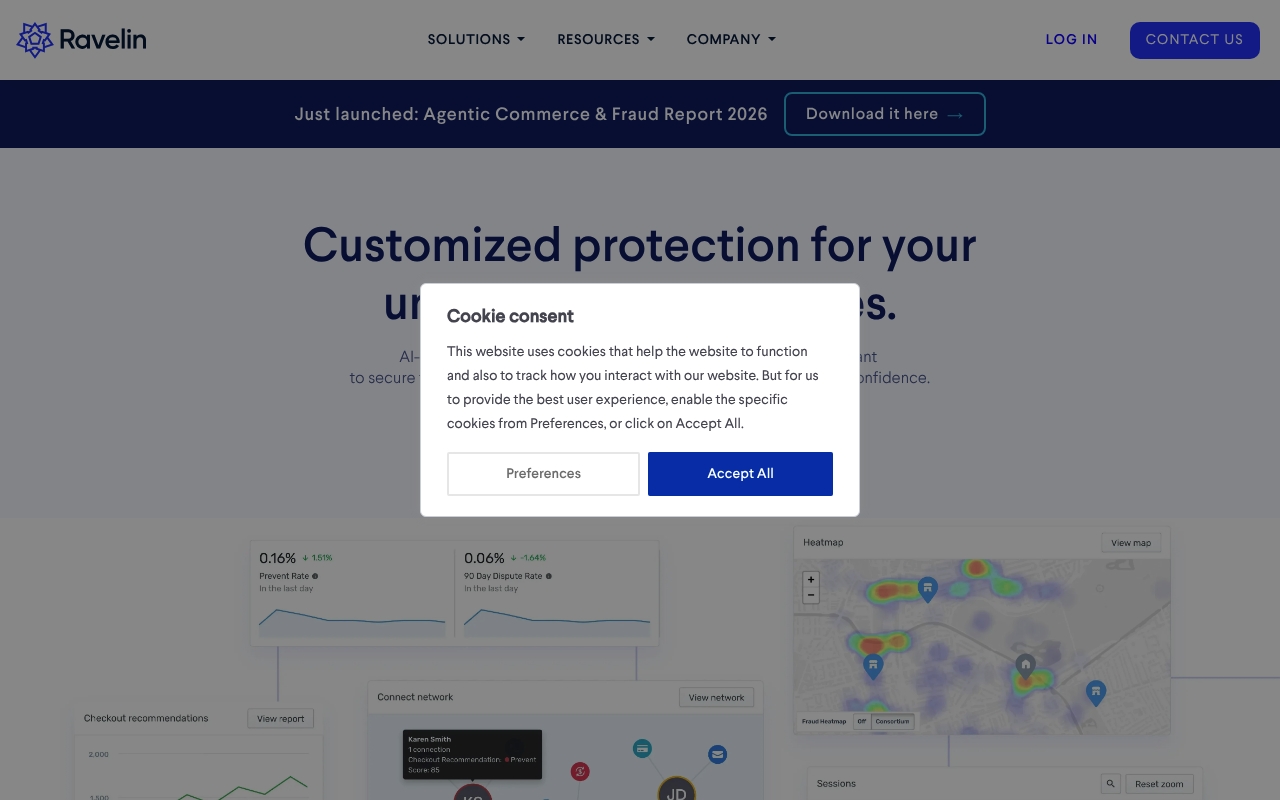
Ravelin is a fraud prevention and risk intelligence platform built for the modern payment landscape. Rather than relying on outdated blacklists and rule engines, the company uses behavioral analytics and machine learning to distinguish legitimate transactions from fraudulent ones in real time. The platform sits between merchants and payment processors, analyzing transaction patterns, user behavior, and contextual signals to catch fraud before it hits the books. Ravelin's approach acknowledges a fundamental tension in fintech: overly aggressive fraud screening kills conversions, while loose controls breed chargebacks. The company's API-first architecture means it integrates directly into checkout flows without requiring merchants to rebuild their payments infrastructure. What sets Ravelin apart is its focus on the nuance between fraud risk and business risk. Many competitors offer binary accept-or-decline decisions; Ravelin surfaces risk scores and behavioral indicators, letting merchants make informed decisions about which transactions to challenge, approve, or send to manual review. This flexibility matters especially for high-value or unusual transactions where false positives hurt revenue. Ravelin operates primarily in the B2B space, serving mid-market and enterprise merchants across e-commerce, travel, and fintech. The company competes in a crowded fraud detection market dominated by established players, but gains ground through superior machine learning models and a merchant-centric product philosophy. As payment volumes continue to surge across Europe and digital fraud becomes increasingly sophisticated, Ravelin's technology sits at a critical chokepoint in the transaction flow.

Callsign
Callsign🇬🇧
Est. 2012

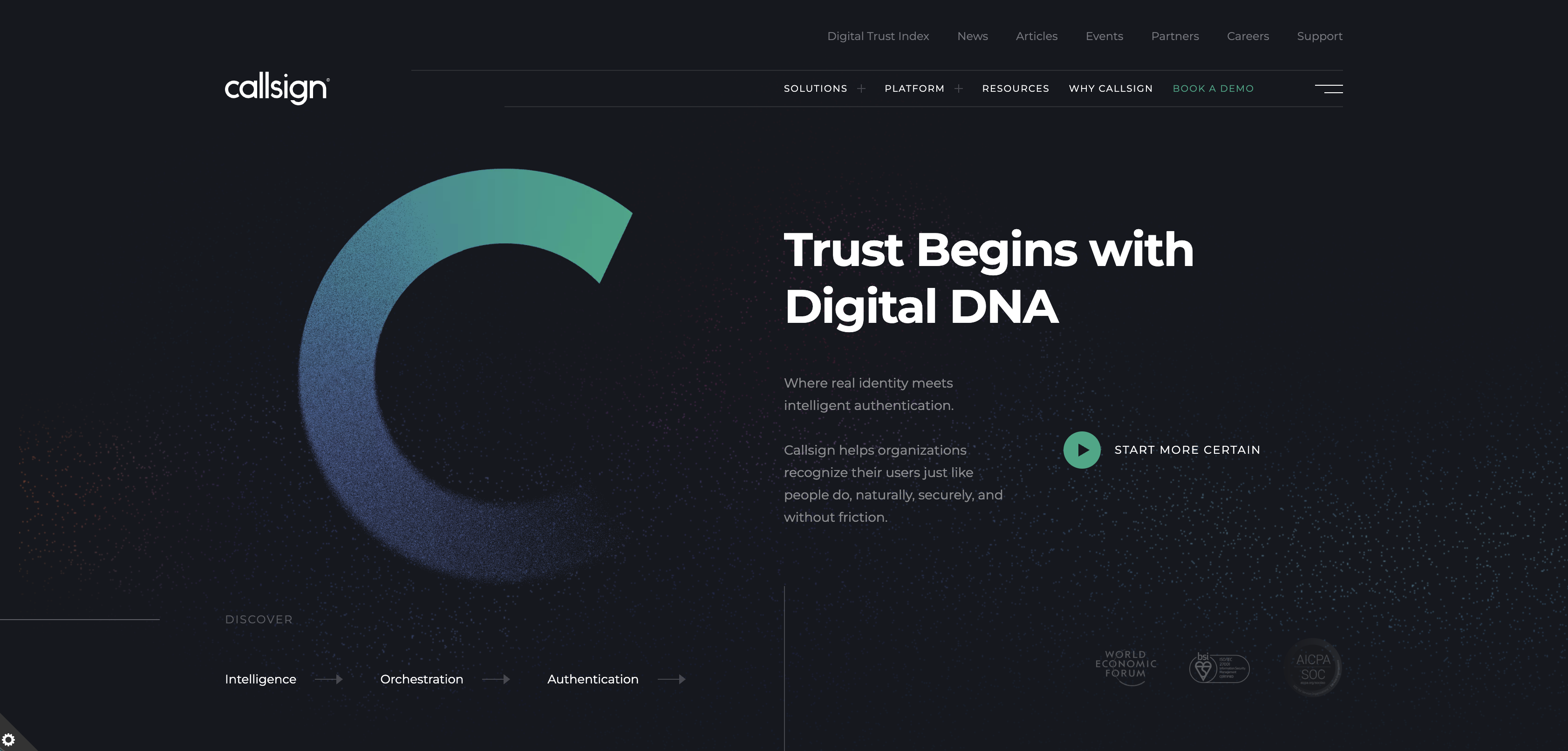
Fraud prevention and digital identity verification have become the unglamorous but critical backbone of modern fintech. Callsign approaches this from an angle most security vendors miss: behavioral biometrics and real-time risk assessment that happen silently in the background, rather than tripping up legitimate users with friction-heavy verification steps. The London-based company combines device intelligence, behavioral patterns, and contextual analysis to spot fraudsters and authenticate users without making them jump through hoops. Where traditional identity verification often feels like airport security—exhausting and necessary—Callsign's approach is more like a doorman who knows your face. It's built for financial services, payments processors, and regulated platforms that need to balance security with user experience. The company works across account opening, transaction authentication, and ongoing monitoring, meaning it can catch both the obvious fraud attempts and the sophisticated ones that look almost legitimate. In a landscape crowded with point solutions, Callsign stands out by offering something closer to continuous, intelligent risk assessment than binary yes-or-no identity checks. For European fintechs growing fast and handling real money, this kind of frictionless security is no longer a nice-to-have—it's becoming the baseline expectation.

Feedzai
Feedzai🇵🇹
Est. 2010

Feedzai is a fraud detection and financial crime prevention platform that works behind the scenes for banks, payment processors, and fintech companies across Europe and beyond. The company uses machine learning to spot suspicious transactions in real time, flagging fraud before it costs institutions millions while keeping legitimate customers from being blocked unnecessarily. Unlike legacy fraud systems that rely on rigid rules and lag behind new attack patterns, Feedzai's approach adapts continuously, learning from emerging threats across its network of financial institutions. The platform handles everything from card fraud and money laundering to synthetic identity schemes and account takeover attempts. It's become a critical layer of defense for institutions managing enormous transaction volumes, where manual review is impossible and false positives destroy customer experience. In the European market, Feedzai competes alongside more traditional risk vendors but stands out through its speed and sophistication. Banks increasingly rely on AI-driven systems rather than rule-based gatekeepers, and Feedzai has positioned itself as the intelligent alternative that doesn't just block transactions—it understands behavior. The company serves everyone from global systemically important banks to smaller regional players, offering both real-time decisioning and historical analytics. Feedzai represents a broader shift in how financial institutions approach security: from reactive policing to predictive intelligence.

View all 18 Fraud & Security companies →